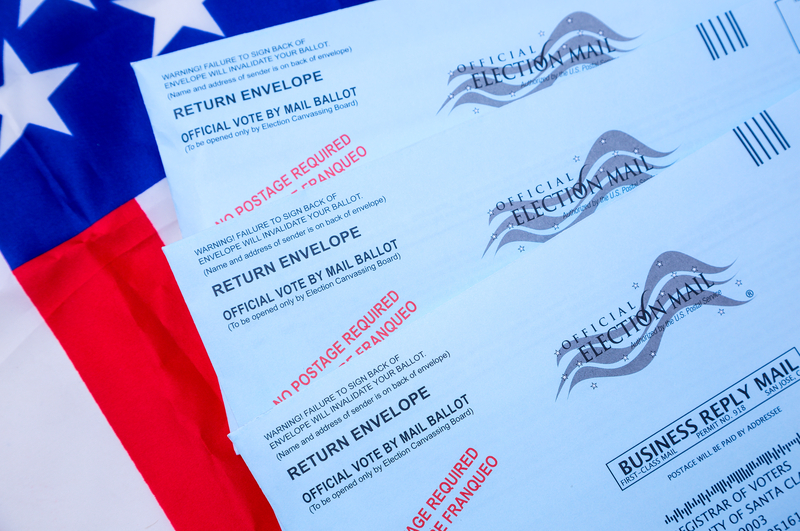
New data from Angus Reid USA finds considerable distrust (32%) or uncertainty (33%) from Americans toward their state and local election authorities. Overall, one-third (35%) say they trust these institutions, rising to 39 per cent among Non-MAGA Republicans and 42 per cent among Democrats — a reversal of the pattern seen almost everywhere else in the survey. Trust in the presidency shows the widest partisan gap of any institution tested, with 72 per cent of MAGA Republicans saying they trust the presidency to do what is right, compared with just 11 per cent of Democrats.
Government
Justice & Security
Social & Civic
Election Authorities
Methodology
›
Government Institutions
A polarized presidency, a more evenly trusted city hall
Federal, state and local government institutions show the widest partisan divide in the survey. Trust in the presidency and the Supreme Court depends heavily on political identity, while state and local government, along with election authorities, draw more evenly balanced views across party lines. Public trust in the federal government nationally is near a historic low: just 17 per cent of Americans told the Pew Research Center in late 2025 that they trust Washington to do what is right most of the time, one of the lowest readings in the nearly seven decades that survey has run.
Angus Reid USA, Institutional Trust survey, July 15–18, 2026, n=1,006 American adults.
Trust in the presidency splits 72 per cent among MAGA Republicans against 11 per cent among Democrats, the widest partisan gap of any government institution tested. The Supreme Court follows a similar pattern, trusted by 52 per cent of MAGA Republicans compared with 17 per cent of Democrats. Trust in local government and election authorities, by contrast, is spread far more evenly across party lines — Americans appear to separate their view of national political institutions from the governments closest to home. Older Americans report higher trust than those 18 to 34 in the federal civil service, state government and local government, while trust in Congress skews slightly younger. Men report higher trust than women across every government institution tested.
Justice & Security Institutions
The military divides Americans by party and by generation alike
Police, courts and national security institutions divide Americans by party and by generation. The U.S. military draws the highest overall trust of any institution tested, but that trust is concentrated among MAGA Republicans and older adults. National confidence in the military has been on a longer decline as well: Gallup has tracked confidence in the armed forces falling to its lowest level in over two decades, a slide that has coincided with a well-documented recruitment shortfall across the services.
Angus Reid USA, Institutional Trust survey, July 15–18, 2026, n=1,006 American adults.
Trust in the military splits 79 per cent among MAGA Republicans against 39 per cent among Democrats, one of the widest partisan gaps in the survey. The military also shows the largest age gap of any institution tested, rising from 39 per cent among adults 18 to 34 to 66 per cent among those 55 and older — a 27-point gap that is the widest recorded anywhere in the survey. The Department of Justice and intelligence agencies draw lower overall trust but show the same partisan pattern. Men report modestly higher trust than women across every justice and security institution tested.
Social & Civic Institutions
Science and schools favor Democrats; religion is the exception
Trust in schools, universities, science and the media runs in the opposite direction from government and security institutions: Democrats are consistently more trusting than MAGA Republicans, often by wide margins. Doctors and other medical professionals are the most broadly trusted institution tested across every group measured. That partisan pattern echoes national trends: a Pew Research Center survey published in January 2026 found 90 per cent of Democrats and 65 per cent of Republicans nationally have at least a fair amount of confidence in scientists, a gap that has persisted for years.
Angus Reid USA, Institutional Trust survey, July 15–18, 2026, n=1,006 American adults.
Trust in scientists and scientific institutions splits 72 per cent among Democrats against 29 per cent among MAGA Republicans, the widest gap recorded anywhere in the survey. Universities and colleges (55 per cent versus 22 per cent) and the public school system (44 per cent versus 20 per cent) follow a similar pattern. Religious institutions are the one social or civic institution where the pattern reverses, trusted more by MAGA Republicans than by Democrats. National news organizations draw the lowest overall trust of any institution tested, and are the one case where adults 18 to 34 report meaningfully higher trust than those 55 and older.
A Closer Look
Democrats trust election authorities most, MAGA Republicans least
State and local election authorities are drawing national attention heading into the 2026 midterms. Homeland Security Secretary Markwayne Mullin threatened top election officials in all 50 states with possible prison time on July 17 if they do not comply with the administration's voter-roll review, days after the Department of Justice sent letters to state and local election officials nationwide warning of criminal liability. State officials have separately told reporters that federal cybersecurity support for election offices has been scaled back ahead of the midterms.
Angus Reid USA, Institutional Trust survey, July 15–18, 2026, n=1,006 American adults.
Trust in state and local election authorities sits in the middle of the pack among government institutions tested, at 35 per cent overall. The partisan pattern is the opposite of what the current standoff might suggest: Democrats report the highest trust (42 per cent) and MAGA Republicans the lowest (31 per cent), with Non-MAGA Republicans in between (39 per cent). Distrust follows the same direction: 32 per cent of Americans overall say they do not trust election authorities, including 34 per cent of MAGA Republicans and 24 per cent of Democrats. Men report higher trust than women in election authorities, 40 per cent versus 31 per cent, one of the wider gender gaps recorded in the survey.
About this survey
Methodology and downloads
Angus Reid USA conducted an online survey from July 15–18, 2026, among a representative randomized sample of 1,006 American adults who are members of Angus Reid Forum USA. For comparison purposes only, a probability sample of this size would carry a margin of error of +/– 3 percentage points, 19 times out of 20. Discrepancies in or between totals are due to rounding. The survey was self-commissioned and paid for by Angus Reid USA. “MAGA” and “Non-MAGA” are self-identified sub-groups among Republican-aligned respondents.