
Majority have confidence in state and local police; fewer say the same of FBI, ICE, Supreme Court
January 27, 2026 – Police-reported crimes have fallen significantly since 2000, but Americans are more likely than not to believe there has been an increase in crime in their communities.
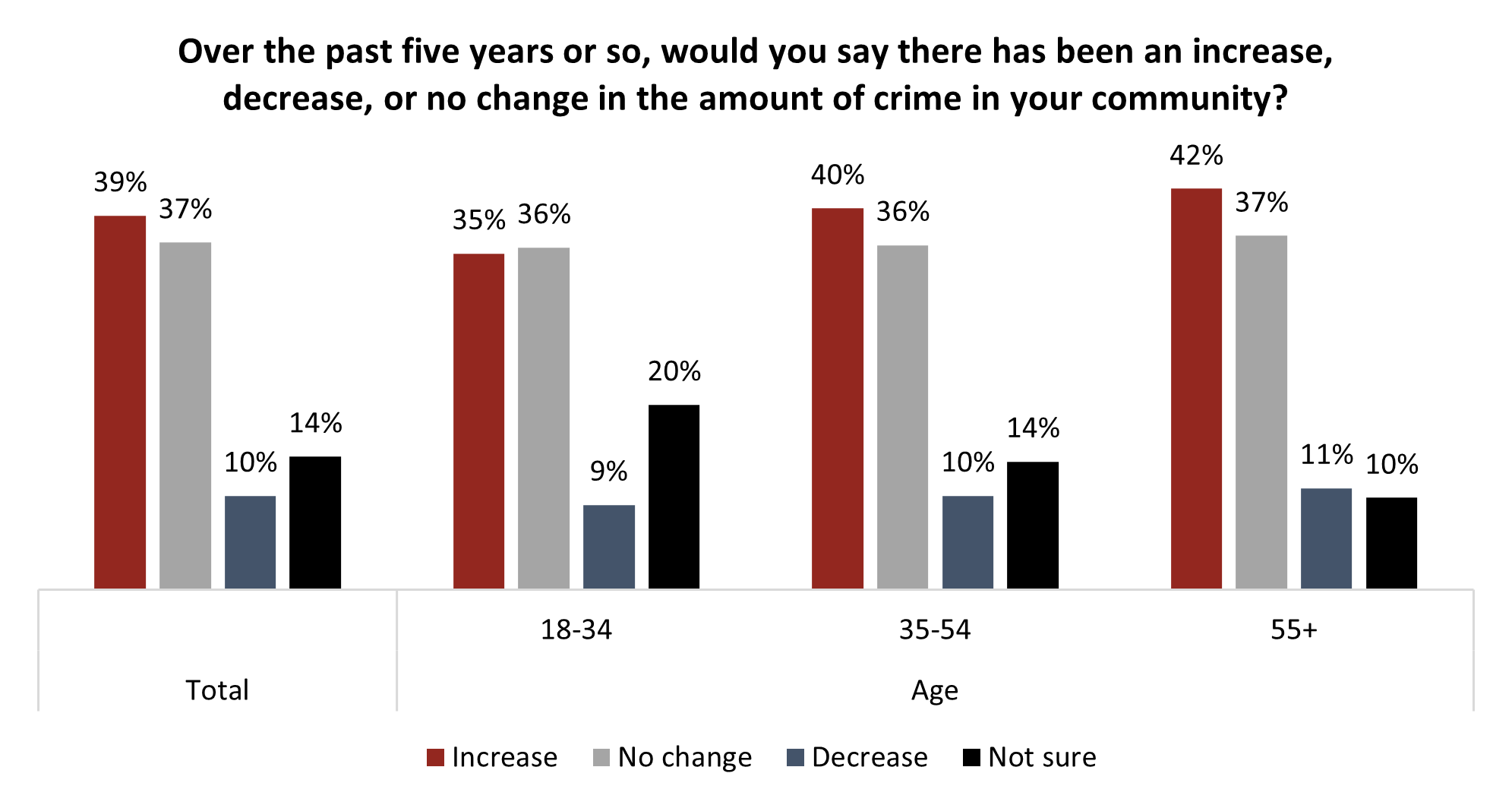
New data from Angus Reid USA finds Americans four-times as likely to say that crime has been increasing (39%) in their community versus decreasing (10%). As to which types of crime, half (53%) of Americans believe there has been an increase in fraud, two-in-five a rise in identity theft (39%) and gun violence (37%) and one-third (34%) believe there has been more shoplifting in their community.
In each case, one-in-ten or fewer believe those types of crimes are decreasing instead.
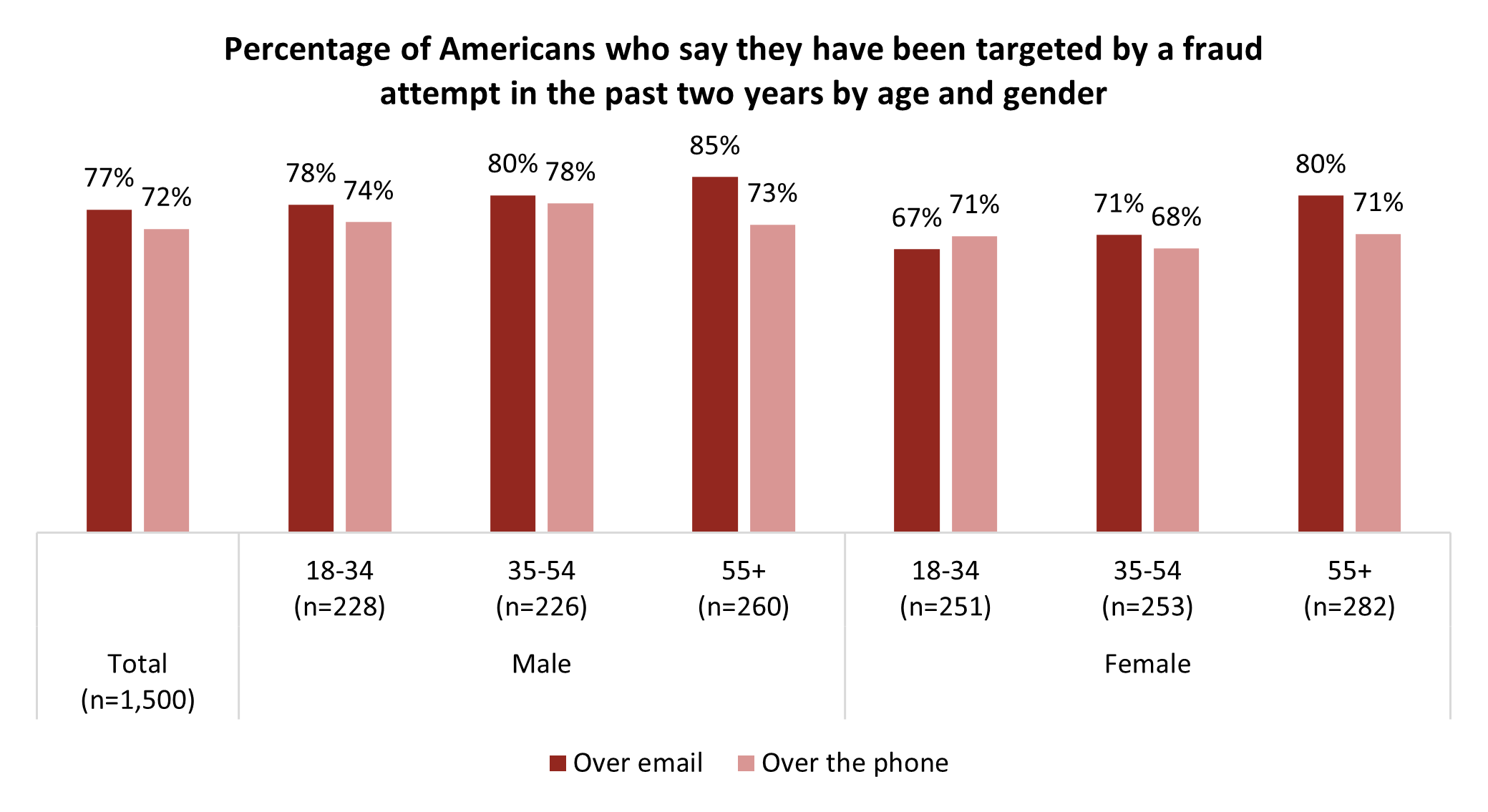
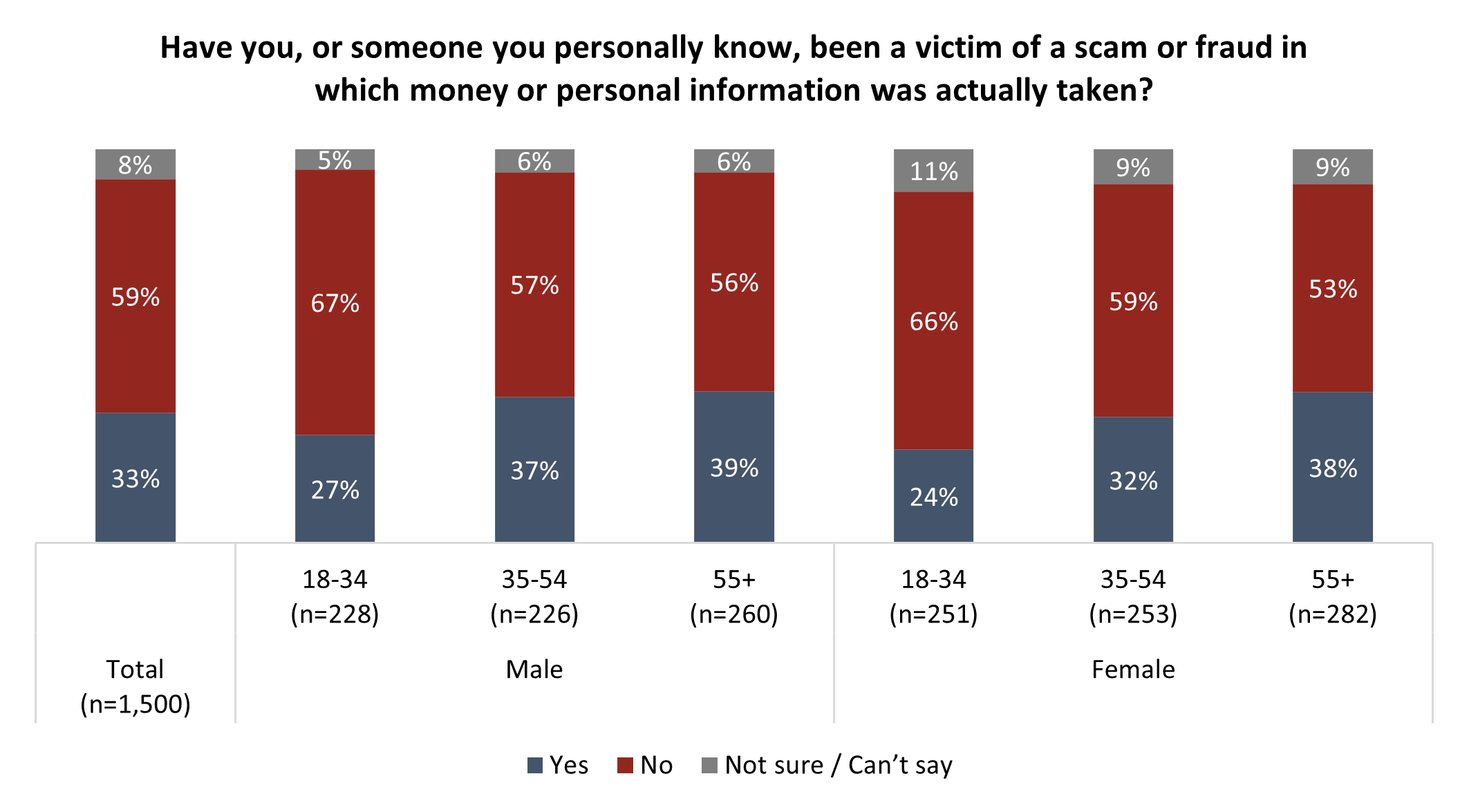
The perceived increase in crime may be tied to personal experience, especially in the case of fraud. Three-quarters of Americans say they have been targeted by what they believe is a scam either via email (77%) or over the phone (72%). One-third (33%) say they’ve lost money or personal information to fraud or know someone who has.
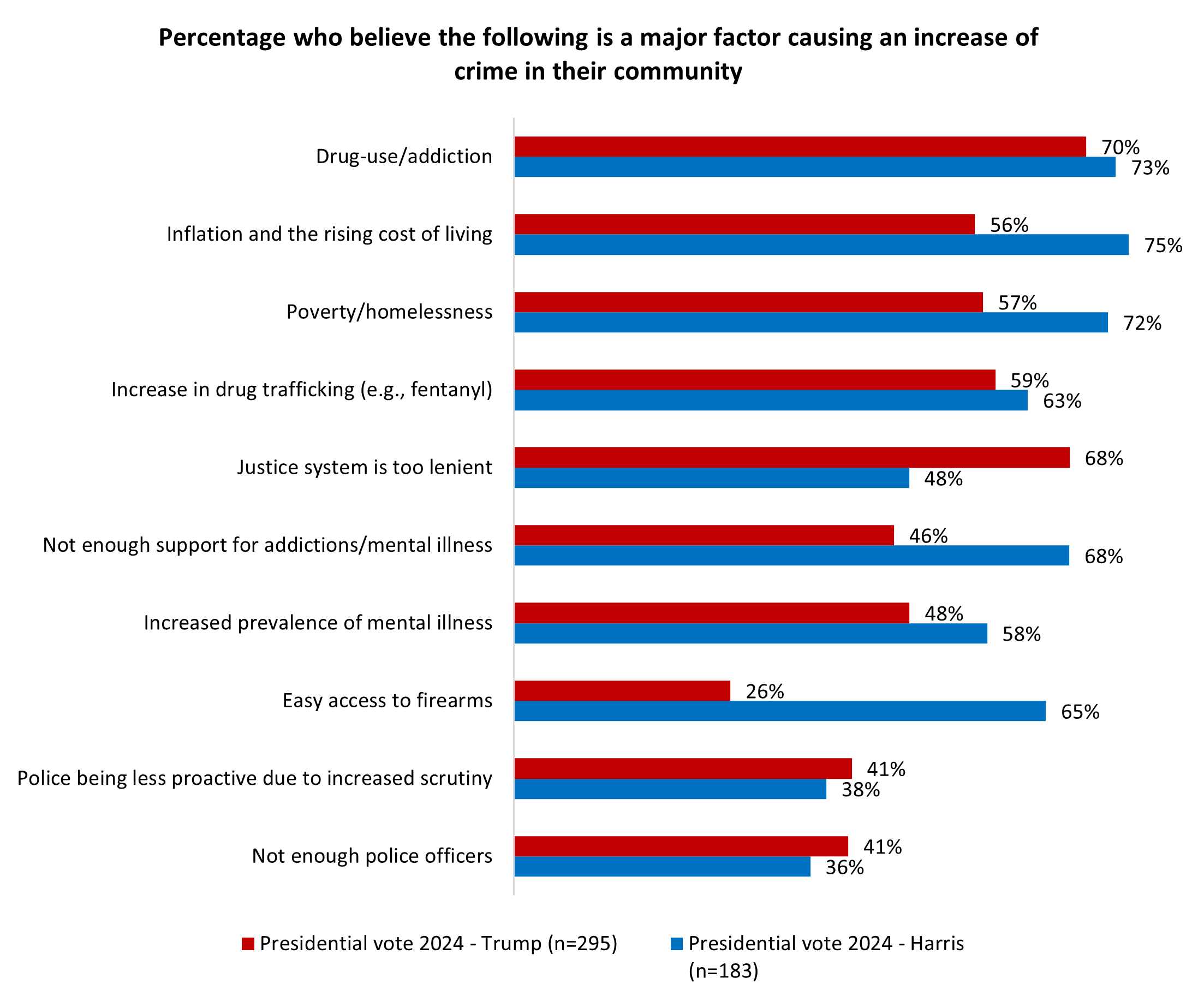
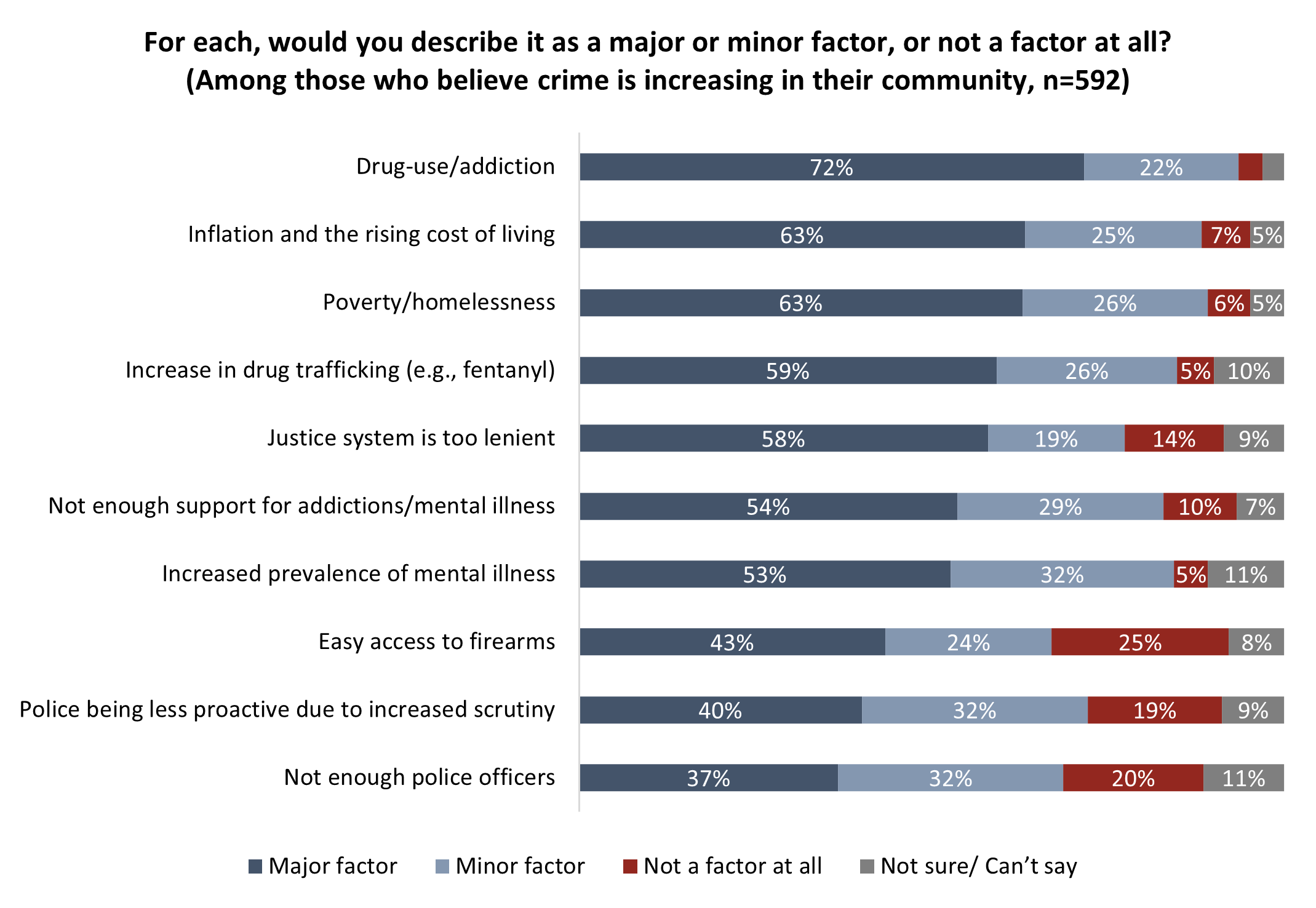
For those who believe crime is on the rise, the major factors at work are drug use and addiction (72%), poverty (63%), the high cost of living (63%), drug tracking (59%) and a justice system they describe as too lenient (58%).
However, these factors are viewed differently depending on the political lens of the respondent. Those who voted for President Donald Trump in 2024 are more likely to point to the justice system’s leniency (68%) than those who voted for the Democratic candidate Kamala Harris (48%). Those latter voters are more likely to point to issues around poverty (72%) and the cost of living (75%), a lack of resources for addictions and mental illnesses (68%) and the proliferation of firearms (65%).
More Key Findings:
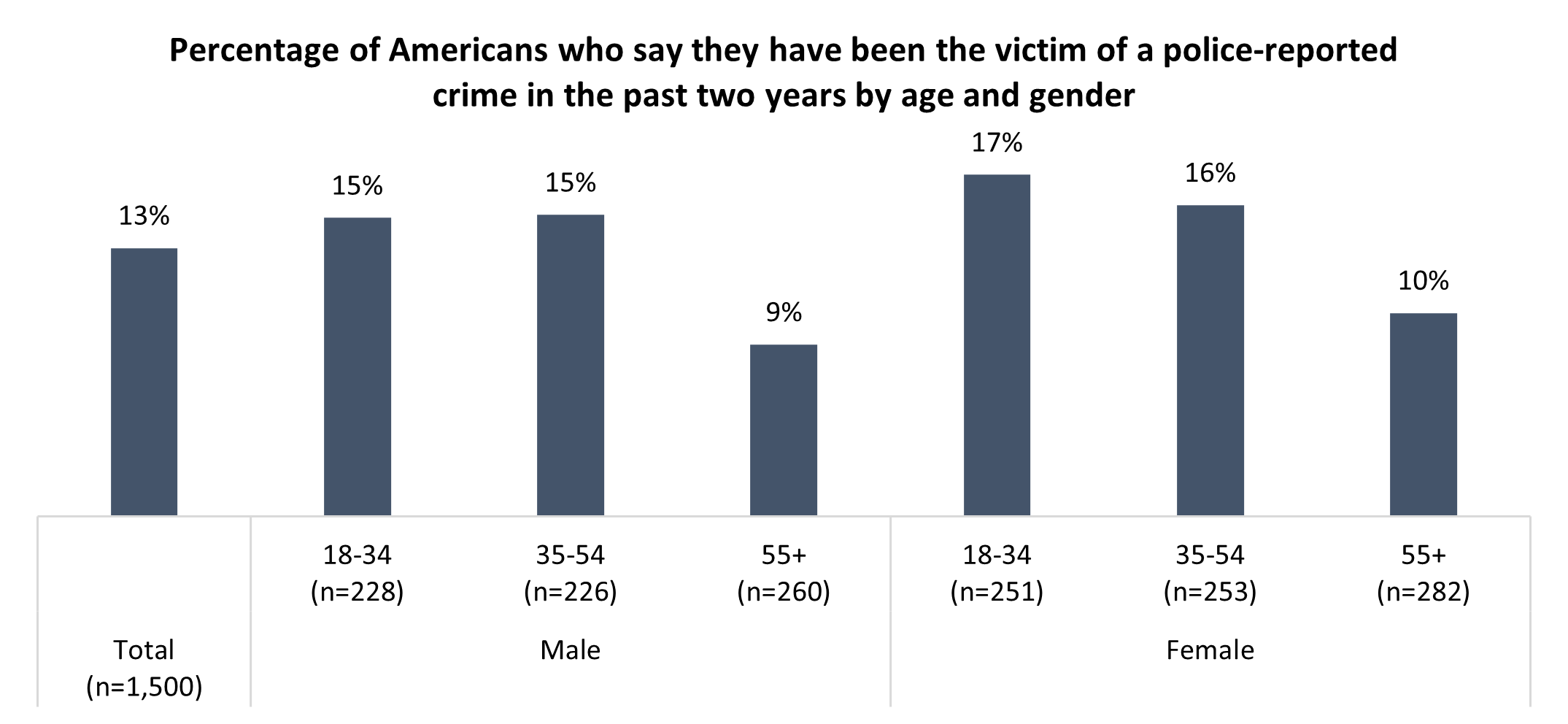
- One-in-eight (13%) Americans say they have been the victim of a police-reported crime in the past two years.
- Two-thirds (66%) of Americans, including similar numbers of Trump (70%) and Harris (68%) voters believe their neighborhood is a safe place to walk alone after dark.
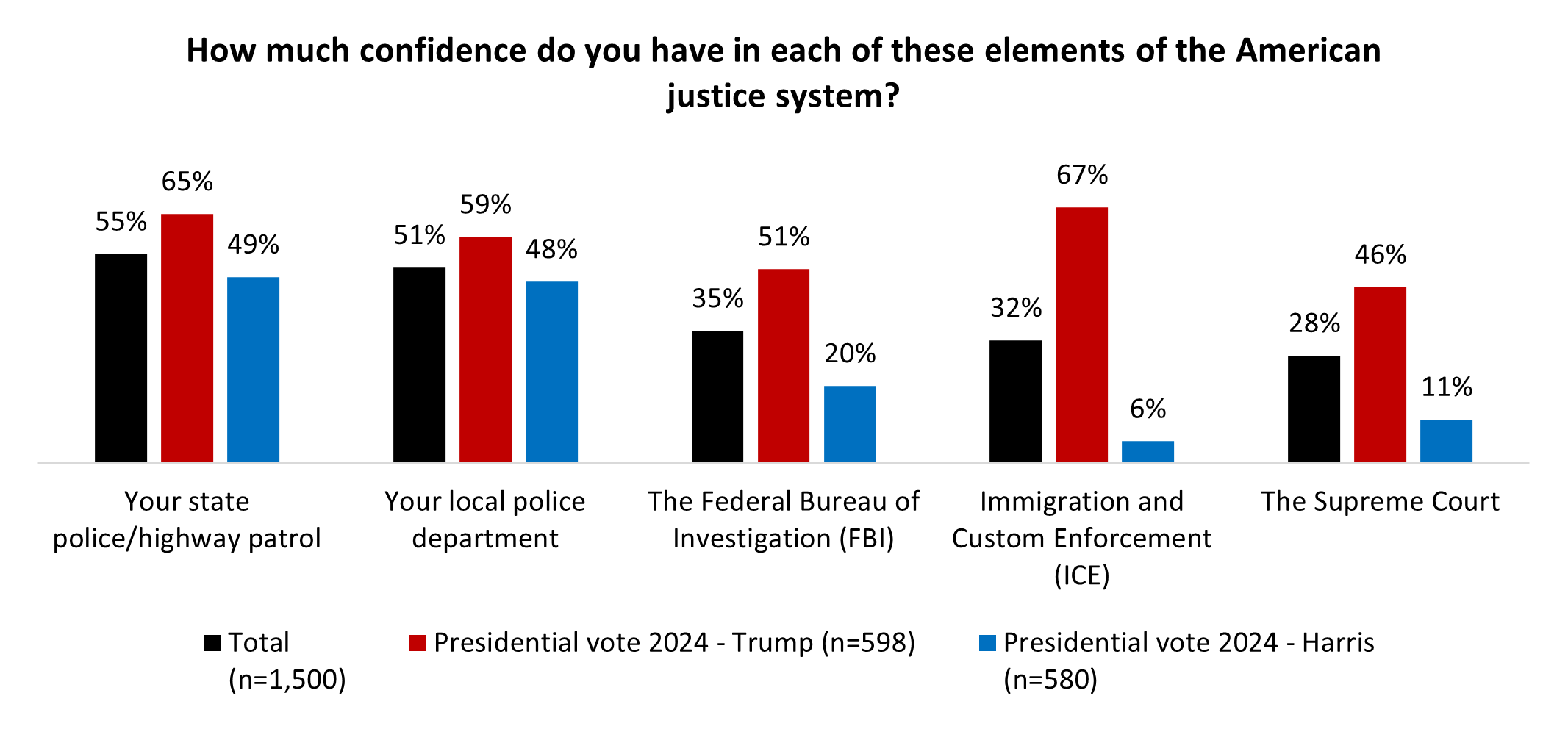
- More than half of Americans say they have confidence in their state police (55%) and local police departments (51%). Confidence is lower in the FBI (35%), ICE (32%) and the Supreme Court (28%).
INDEX
Part One: Experiences
-
One-in-eight say they’ve been victim of a police-reported crime in past two years
-
Three-quarters targeted by fraud attempts
-
One-third say they’ve had money or personal information taken
Part Two: Perceptions
-
Three-in-five believe neighborhood ‘safe’ after dark
-
Crime more likely to be seen as on the rise than decreasing
-
What factors are playing a role?
-
Views of the justice system
Part One: Experiences
One-in-eight say they’ve been victim of a police-reported crime in past two years
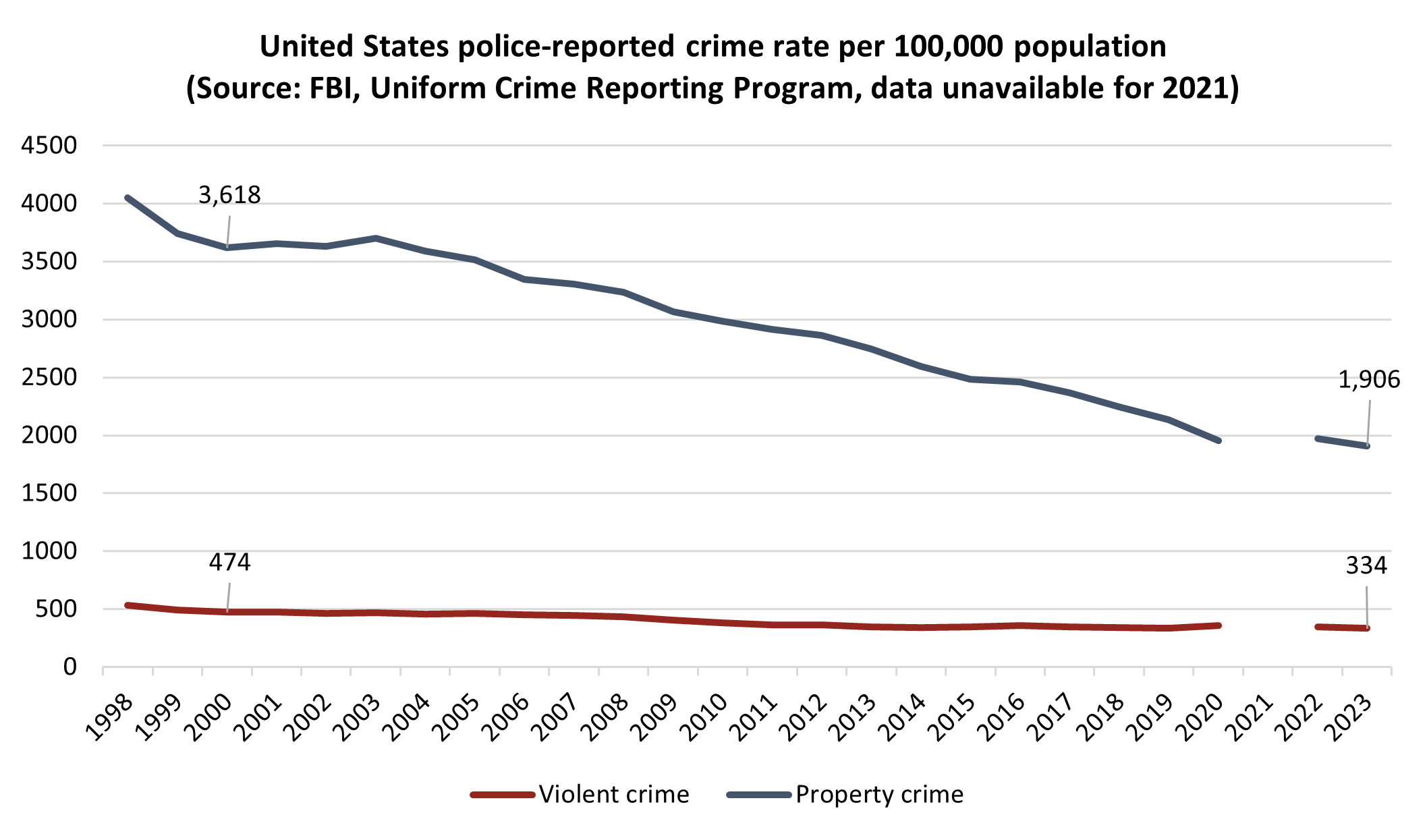
It has been a long period of decline for crime in the United States, according to data from the Federal Bureau of Investigation. At the turn of the century, there were 3,618 property crimes and 474 violent crimes reported to police per 100,000 population. More than two decades later, in 2023, the last year for which data is available, there were half as many property crimes per capita (1,906) and a 42 per-cent per-capita decline in violent crimes (474 to 334):
About one-in-eight (13%) Americans say they were the victim of a police-reported crime in the past two years. Women are more likely than men to say that was the case, and older Americans are less likely to say they have been the victim of a crime:
Three quarters targeted by fraud attempts
While police-reported crime in general is on the decline, the scale of fraud and scams are growing in the United States. The Federal Trade Commission reported that American consumers lost $12.5 billion to fraud in 2024, a 25-per-cent increase on 2023 data.
Three-quarters of Americans say they’ve been targeted by fraud either over email (77%) or by phone (72%), suggesting this is a widespread concern:
One-third say they’ve had money or personal information taken
One-third (33%) say they or someone they know have lost either personal information or money to a scam. And older Americans are more likely than younger ones to report that being the case:
Part Two: Perceptions
Considering their own communities, Americans are more likely to say that crime has increased rather than decreased over the past five years. Across all age groups the majority say crime has either increased or stayed about the same, with approximately one-in-ten saying it has decreased:
Crime more likely to be seen as on the rise than decreasing
Americans are more likely to believe crime of various types are on the rise than on the decline.
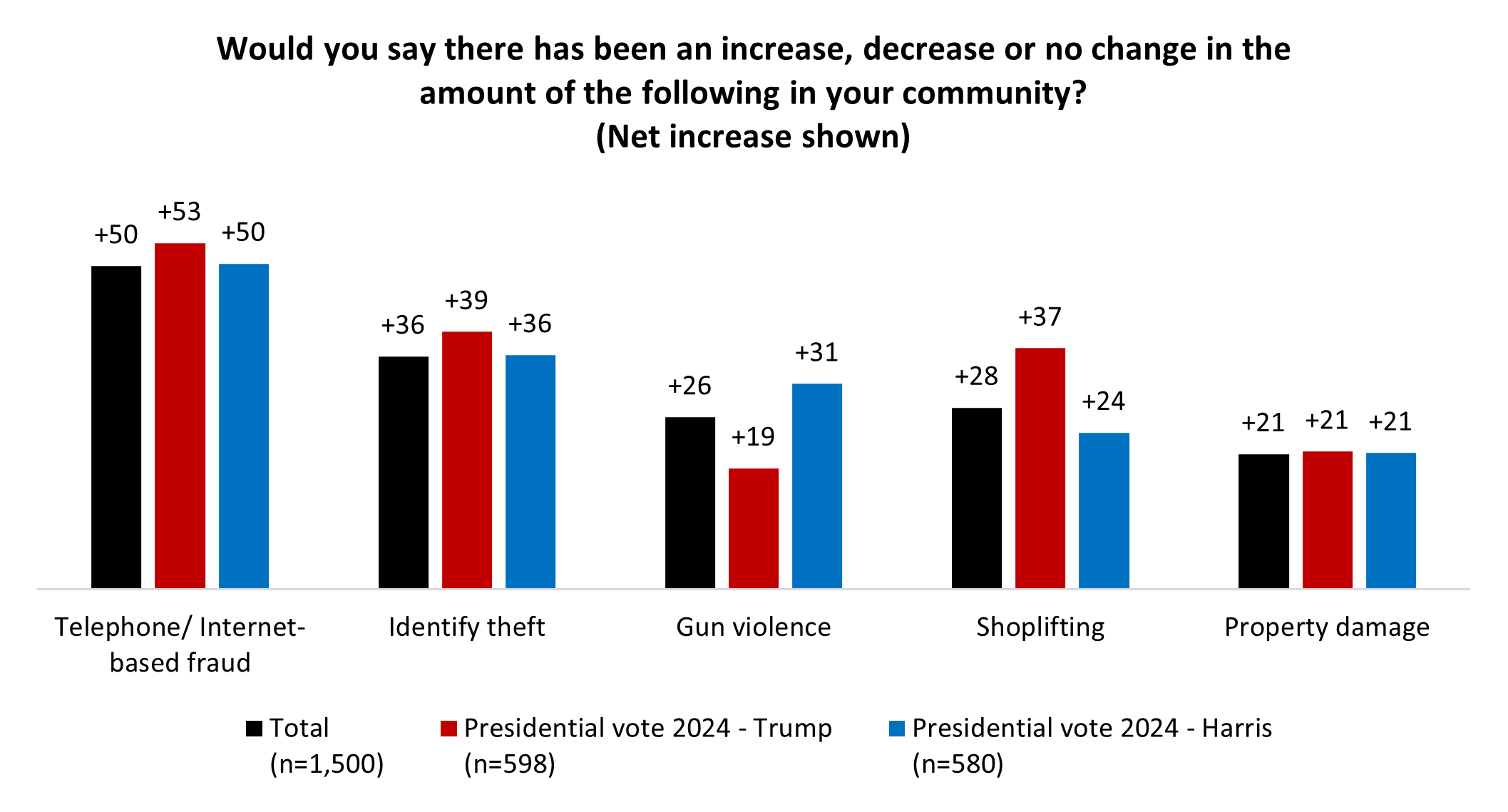
With most reporting being targeted by fraud, it’s no surprise that half (53%) believe telephone and internet-based scams are on the increase while only a few (3%) believe those types of crimes are becoming less frequent.
By a more than three-to-one margin, Americans say gun violence (37% to 11%) and property damage (30% to 9%) are increasing rather than decreasing.
On identity theft (39%) and shoplifting (34%), more than one-third believe those types of crimes are on the rise:

On this matter, there are different perceptions based on respondents’ politics. Those who voted for Trump are more likely to see an increase in shoplifting than those who voted for Harris. Harris voters are more likely to believe that gun violence is on the rise than those who voted for Trump:
What factors are playing a role?
Americans who believed any one of those crimes were on the rise were asked to assess what they believe was leading to an increase of crime. Drugs and poverty are at the top of the list of selected factors. Three-in-five (58%) say the leniency of the justice system is a major factor in the perceived increase of crime, while more than half (54%) believe there isn’t enough support for addictions and mental illness.
Factors less selected on the list include easy access to firearms, the increased scrutiny on police and the lack of police resources, although at least one-third in each of those cases believe them to be a major factor:
Trump and Harris voters who believe crime is increasing are divided in their assessments as to what are major factors in the rise.
Harris voters are more likely to believe the root causes of increasing crime are poverty, the high cost of living, the lack of supports for those with addictions and mental illnesses and the widespread prevalence of firearms.
Trump voters are more likely to point to a justice system they describe as lenient:
Three-in-five believe neighborhood ‘safe’ after dark
Americans are more likely than not to believe their neighborhood is a safe place after dark. Two-thirds (66%) believe they can walk around in safety, while one-quarter (24%) disagree.
There is notably not a significant political difference on this question; those who voted for President Donald Trump in the 2024 election (70%) are as likely as those who voted for the Democratic candidate and former Vice-President Kamala Harris (68%) to believe in their neighborhood’s late-night safety:

Views of the justice system
Relative to other elements of the U.S. justice system, Americans express more confidence in their police. More than half (55%) say they have confidence in their state police or highway patrol and 52 per cent have complete or a lot of confidence in their local police department. Comparatively, only one-third say the same of the FBI (35%) and Immigration and Custom Enforcement, otherwise known as ICE (32%). Fewer than three-in-ten (29%) say they have confidence in the Supreme Court:

Politics is a significant delineator when it comes to Americans’ views of the justice system. Those who voted Trump in 2024 are more confident than those who voted for Harris in all the elements of the justice system included in the survey. Only one-in-five Harris voters have confidence in the FBI, while even fewer in that group express confidence in ICE (6%) or the Supreme Court (11%):
METHODOLOGY
Angus Reid USA conducted an online survey from Nov. 26 to Dec. 1, 2025 among a representative randomized sample of 1,500 American adults who are members of Angus Reid Forum USA. For comparison purposes only, a probability sample of this size would carry a margin of error of +/- 3 percentage points, 19 times out of 20. Discrepancies in or between totals are due to rounding. The survey was self-commissioned and paid for by Angus Reid USA. Detailed tables are found at the end of this release.
For detailed results by age, gender, region, education, and other demographics, click here.
For PDF of full release, click here.
MEDIA CONTACTS
Shachi Kurl, President: 1.604.908.1693 shachi.kurl@angusreid.org @shachikurl
Matt Kleinschmit, Managing Director: matt.kleinschmit@reach3insights.com