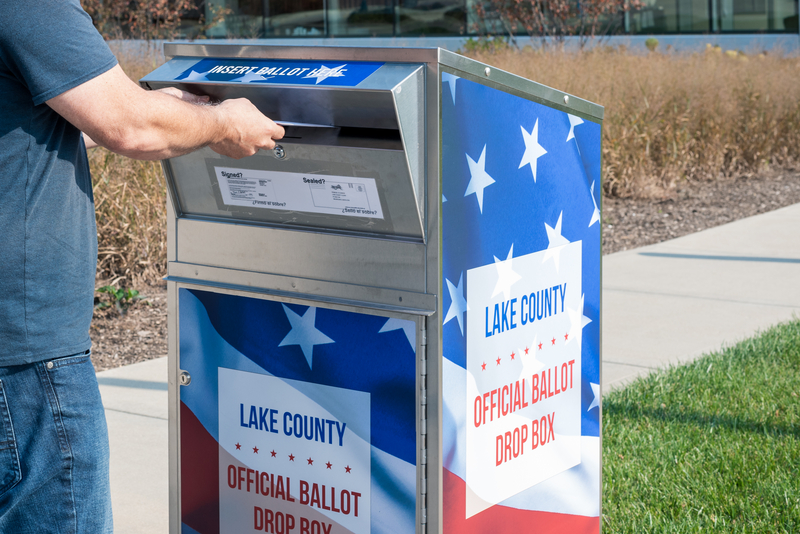
New data from the non-profit Angus Reid Institute finds a plurality ultimately supportive of the proposed SAVE America Act. The legislation, which passed the House 218–213 in February but has stalled in the Senate, would require documentary proof of U.S. citizenship when registering to vote and generally require photo identification when casting a ballot. More than half of Americans (53%) say they had heard at least something about the proposal before taking the survey, while one-in-five (21%) had heard nothing at all.
About the Act
Awareness
Perceived Impact
Support
Have ID?
Verification Approach
Methodology
›
Intro: SAVE America Act
What the SAVE America Act would do
The SAVE America Act, short for the Safeguard American Voter Eligibility Act, is Republican-backed federal legislation that would establish new nationwide requirements for voting in federal elections. Introduced in the House of Representatives in January 2026, the bill would require Americans to provide documentary proof of U.S. citizenship when registering to vote and generally require photo identification when casting a ballot.
The Republican-controlled House passed the SAVE America Act 218–213 on Feb. 11, but the legislation has since stalled in the Senate, where Republicans do not currently have the 60 votes generally needed to overcome a filibuster. President Trump has repeatedly urged Senate Republicans to pass the legislation and has called for changes to Senate rules if necessary, but lawmakers left Washington for their August recess without advancing it. Republican leaders are expected to revisit election legislation when the Senate returns in September.
Public awareness
More than half of Americans had heard at least something about the Act
More than half of Americans say they had heard at least something about the SAVE America Act before taking this survey, including 23 per cent who had heard “a lot” and 30 per cent who had heard “some.” Another 19 per cent had heard only a little, while approximately one-in-five (21%) say they had heard nothing at all.
Angus Reid USA, online survey, July 31–Aug. 5, 2026, n=1,000 American adults.
Weighing the arguments
Americans divided over what they believe the bill will do
Supporters, including President Trump, argue the measures are necessary to prevent non-citizens from participating in federal elections, while opponents say existing law already prohibits non-citizen voting and warn the new documentation requirements could make it more difficult for some eligible Americans to vote. While cases of non-citizens voting have been identified, available research and state election audits indicate the practice is exceedingly rare.
Asked to choose between those two arguments, half of Americans say the Act would primarily help prevent non-citizens from registering or voting, while two-in-five (39%) say it would instead make it harder for eligible U.S. citizens to cast a ballot. Those views are deeply partisan: 91 per cent of MAGA Republicans and 78 per cent of non-MAGA Republicans choose the former, while 69 per cent of Democrats choose the latter.
Angus Reid USA, online survey, July 31–Aug. 5, 2026, n=1,000 American adults.
Half support it after considering the debates
Support holds near half even after hearing both sides
Respondents were asked at the beginning of the survey whether they supported or opposed the SAVE Act, and then later — after considering two lines of reasoning, one warning of non-citizen voting and one warning of new barriers for eligible citizens — were asked again. Initial support drops from 51 to 49 per cent after considering these statements, with opposition settling at 37 per cent.
Angus Reid USA, online survey, July 31–Aug. 5, 2026, n=1,000 American adults.
Support and opposition fall heavily along partisan lines, though it is notable that 23 per cent of Democrats support the Act. Opposition outpaces support among 18-to-34-year-olds, while older Americans lean toward support:
| Having considered both perspectives, would you say you... | All (n=1,000) | 18-34 | 35-54 | 55+ | MAGA Rep. | Non-MAGA Rep. | Dem. | Ind./Other |
|---|
| Strongly support the act | 29% | 16% | 25% | 45% | 85% | 58% | 6% | 18% |
| Support the act | 19% | 22% | 21% | 15% | 10% | 20% | 17% | 16% |
| Oppose the act | 14% | 20% | 12% | 10% | 1% | 9% | 19% | 17% |
| Strongly oppose the act | 23% | 23% | 24% | 22% | 0% | 3% | 44% | 15% |
| Not sure/Can’t say | 14% | 19% | 18% | 7% | 3% | 10% | 13% | 33% |
Angus Reid USA, online survey, July 31–Aug. 5, 2026, n=1,000 American adults.
Documentation on hand
Nearly all say they have at least one form of documentation available
One of the arguments proponents have made is that the barrier to satisfying new rules would not be high. For approximately 94 per cent of the adult population, this appears to be true: this group says they have at least one of a U.S. birth certificate, an unexpired passport, or a naturalization certificate that they would be able to present in order to vote.
Angus Reid USA, online survey, July 31–Aug. 5, 2026, n=1,000 American adults.
Beyond the current system
Most say improvements are needed over the current declaration system
Regardless of where this debate goes and whether the SAVE Act is ultimately passed into law, there is a sense among Americans that something more needs to be done to secure elections. Just one-in-five say the existing system — in which applicants attest to their citizenship under penalty of law — is fine as is. The rest are fairly evenly split between wanting documentary proof, government verification using existing records, or some combination of the two.
Angus Reid USA, online survey, July 31–Aug. 5, 2026, n=1,000 American adults.
About this survey
Methodology and downloads
Angus Reid USA conducted an online survey from July 31 to Aug. 5, 2026, among a randomized sample of 1,000 American adults who are members of Angus Reid Forum USA. For comparison purposes only, a probability sample of this size would carry a margin of error of +/- 3.0 percentage points, 19 times out of 20. Discrepancies in or between totals are due to rounding. The survey was self-commissioned and paid for by Angus Reid.