
After Australia became first country to ban social media for kids, Americans appear ready to follow suit
March 30, 2026 – Scrutiny of the negative effects of social media on young people has intensified further following a landmark ruling in California labelling Instagram and YouTube as deliberately addictive and harmful to children. States in the U.S. have faced legal challenges to their attempts to restrict social media access for teenagers even as Australia became the first country to ban under-16s from social media.
According to new data from a wide-ranging study on current social media use by Angus Reid USA, banning those under 16 from platforms would be well received by the vast majority of Americans. Three-quarters (72%) of Americans, and those with kids in the house, say they support a full ban on social media use for anyone under the age of 16.
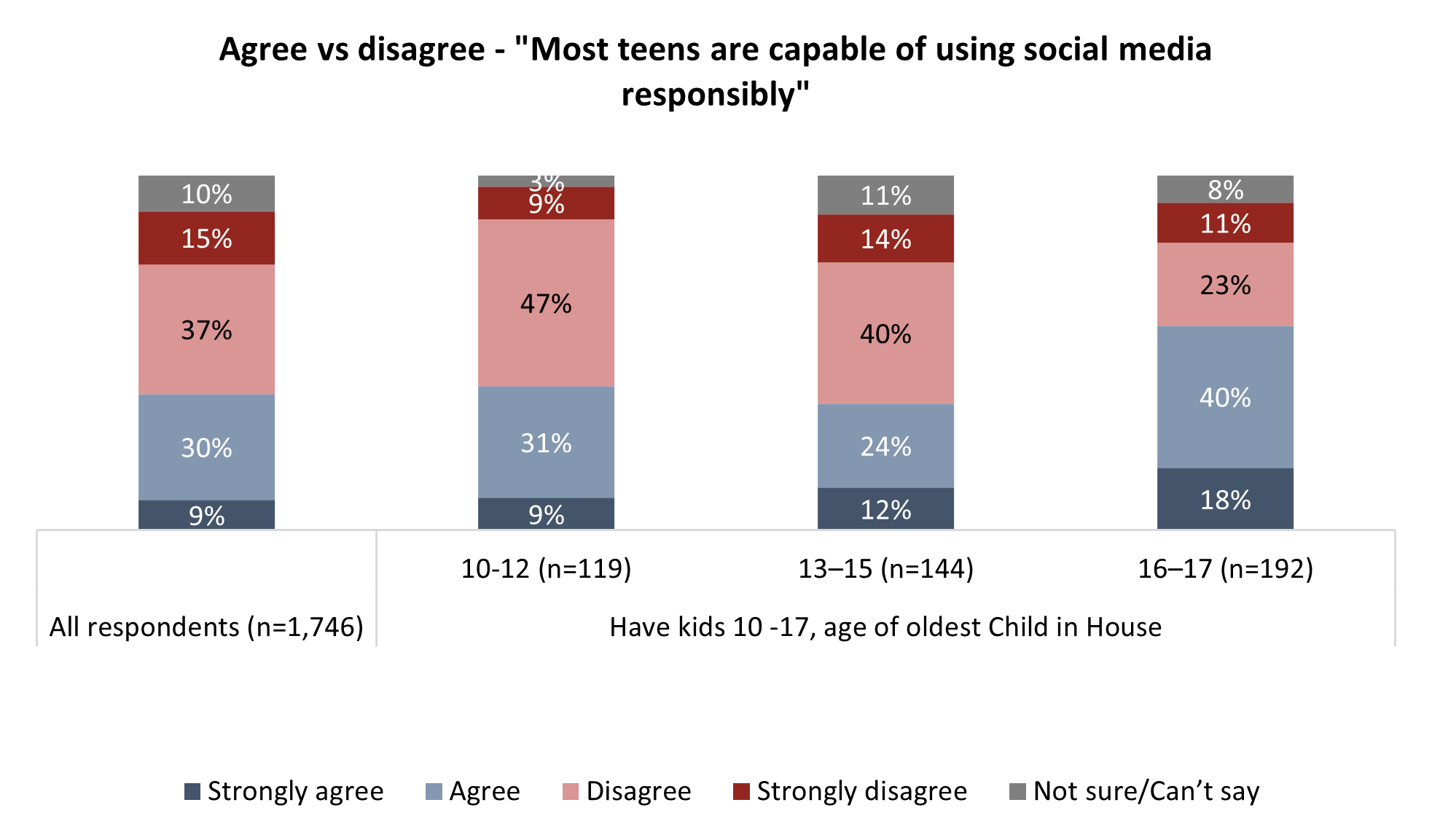
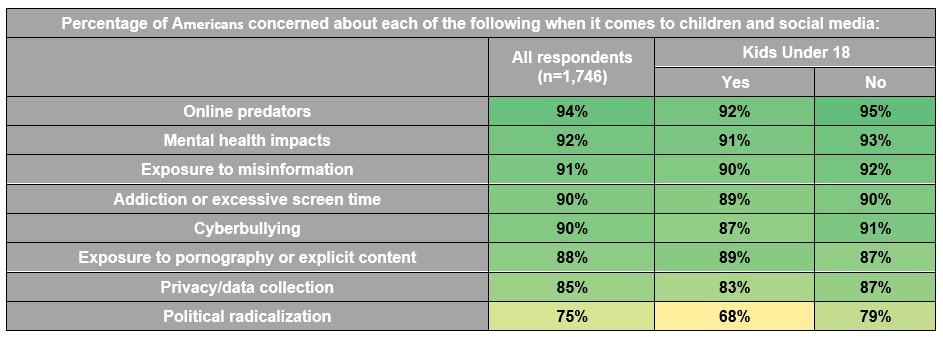
Endorsement of restrictions on the use of social media comes as half (52%) of Americans say they believe teens are not capable of using social media responsibly. Parents of 16- and 17-year-olds are more likely to dissent (68%). However, there is near unanimous concern from Americans over children’s potential exposure on social media to misinformation (91% concerned), cyberbullying (90%), explicit content (88%), negative mental health impacts (92%) and addiction (90%).
As it stands, parents with kids aged 10 to 15 are more likely than not governing their kid’s social media use. A majority say they put restrictions on which apps their kids use, monitor their activity or place time limits.
Although a ban would be welcomed by most parents, more say that the responsibility for regulating social media use should fall to the parents (64%) rather than governments (36%).
More Key Findings:
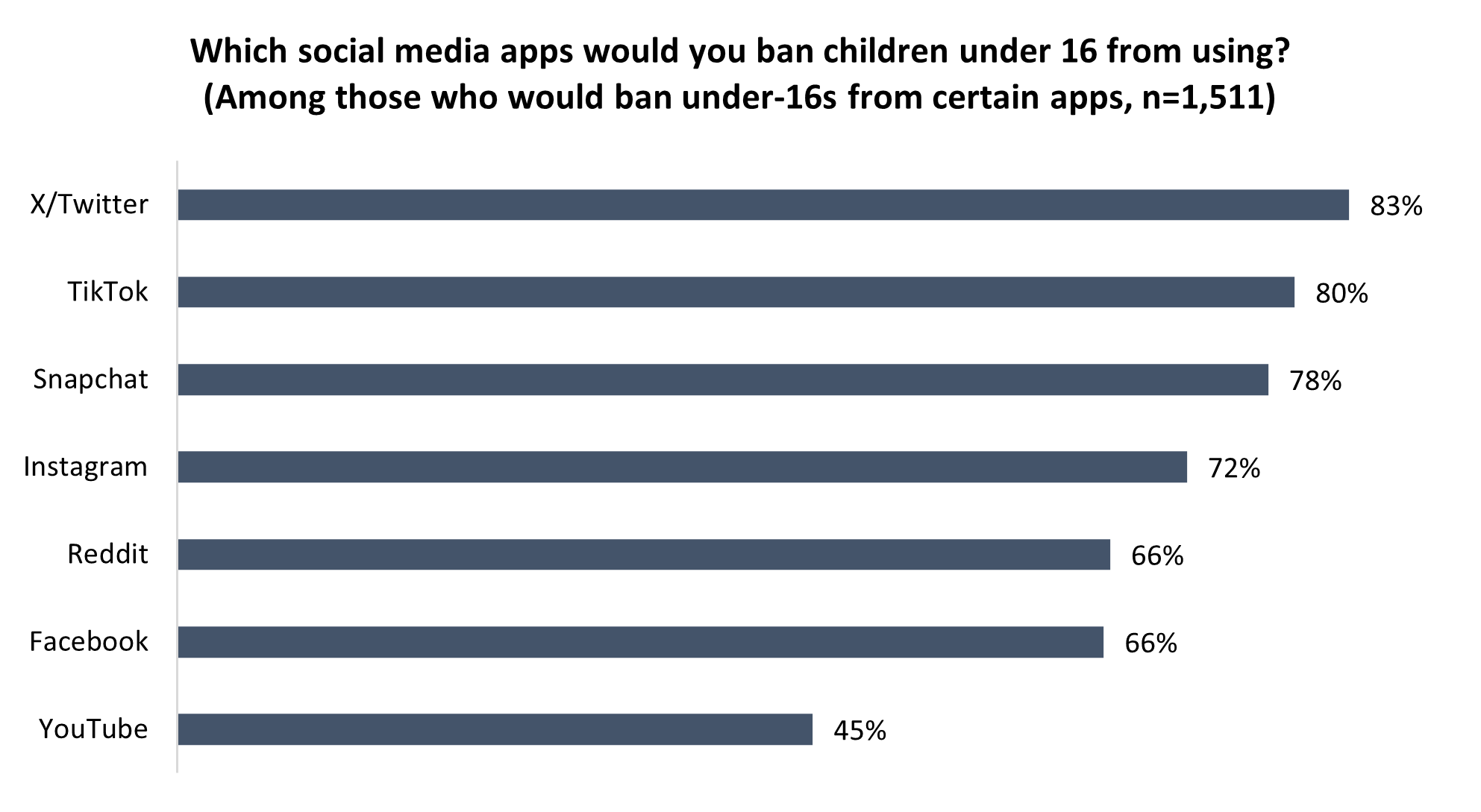
- When those who want under-16s banned only from certain apps are asked which social media should be verboten, X/Twitter (83%), TikTok (80%), and Snapchat (78%) are at the top of the list. Fewer than half (45%) would ban kids under 16 from YouTube.
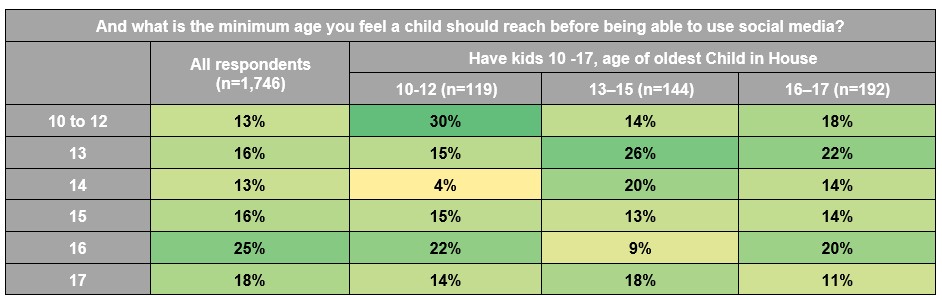
- There is no consensus among Americans as to what age is the right one for kids to have access to social media. The age of 16 is chosen at the highest rate, by one-quarter (25%); near equal numbers say 10-12 (13%), 13 (16%), 14 (13%), and 15 (16%).
INDEX:
Part One: Social media and children
- What’s the right age for social media?
- No shortage of concerns for parents
- Restrictions and monitoring common
Part Two: Views on a proposed Under-16 Ban
- Widespread support for banning social media for those younger than 16
- Support for blocking access to most apps, division over YouTube
- But – ban or no ban – should government or parents regulate teens’ social media use?
Part One: Social media and children
What’s the right age for social media?
Social media remains a relatively new phenomenon, and as such, the impacts of its use on both society as a whole and on subsections – like children – have been slow to reveal themselves. As the picture has emerged, however, the negative impacts appear clear to most. While there are benefits, including finding likeminded people and connecting with friends, studies find that frequent and unregulated social media use among adolescents is associated with a range of mental health harms, including depression, anxiety, poor sleep, and social pressures.
The first question is then, what is the right age to permit children to have their own accounts? Americans in general and American parents have differing views. Parents with younger children in their household are more likely to be permissive of use for 10- to 12-year-olds, while the story overall is a lack of consensus on what age is appropriate:
On the broader question of whether or not teenagers are generally capable of using social media responsibly, Americans are relatively divided but more likely to disagree (52%) than agree (39%). Those with children aged 16 or 17 are much more likely than parents of younger children to agree with this statement, though one-third still disagree (34%):
No shortage of concerns for parents
Those concerns are numerous and evidently significant. Five items – addiction, mental health impacts, online predators, misinformation, and cyberbullying – are all a concern to at least 90 per cent of Americans. Privacy, exposure to explicit content and political radicalization are a concern to more than three-quarters:
Restrictions and monitoring common
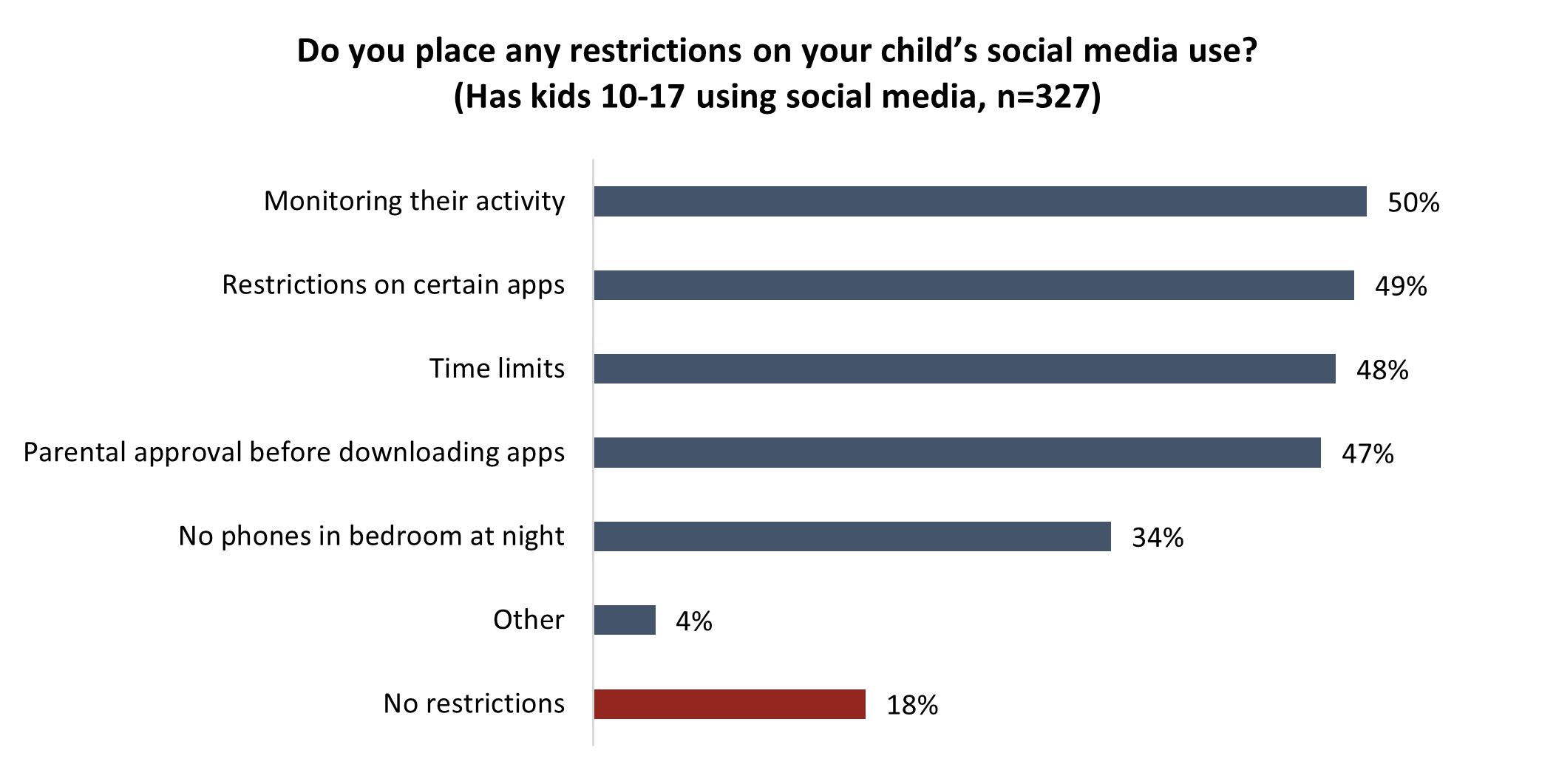
Among those parents in the survey with kids aged 10 to 17, approaching three-quarters (72%) say that their child(ren) currently uses social media. Notably, those whose oldest child is in the 10 to 12 range are split evenly over current usage: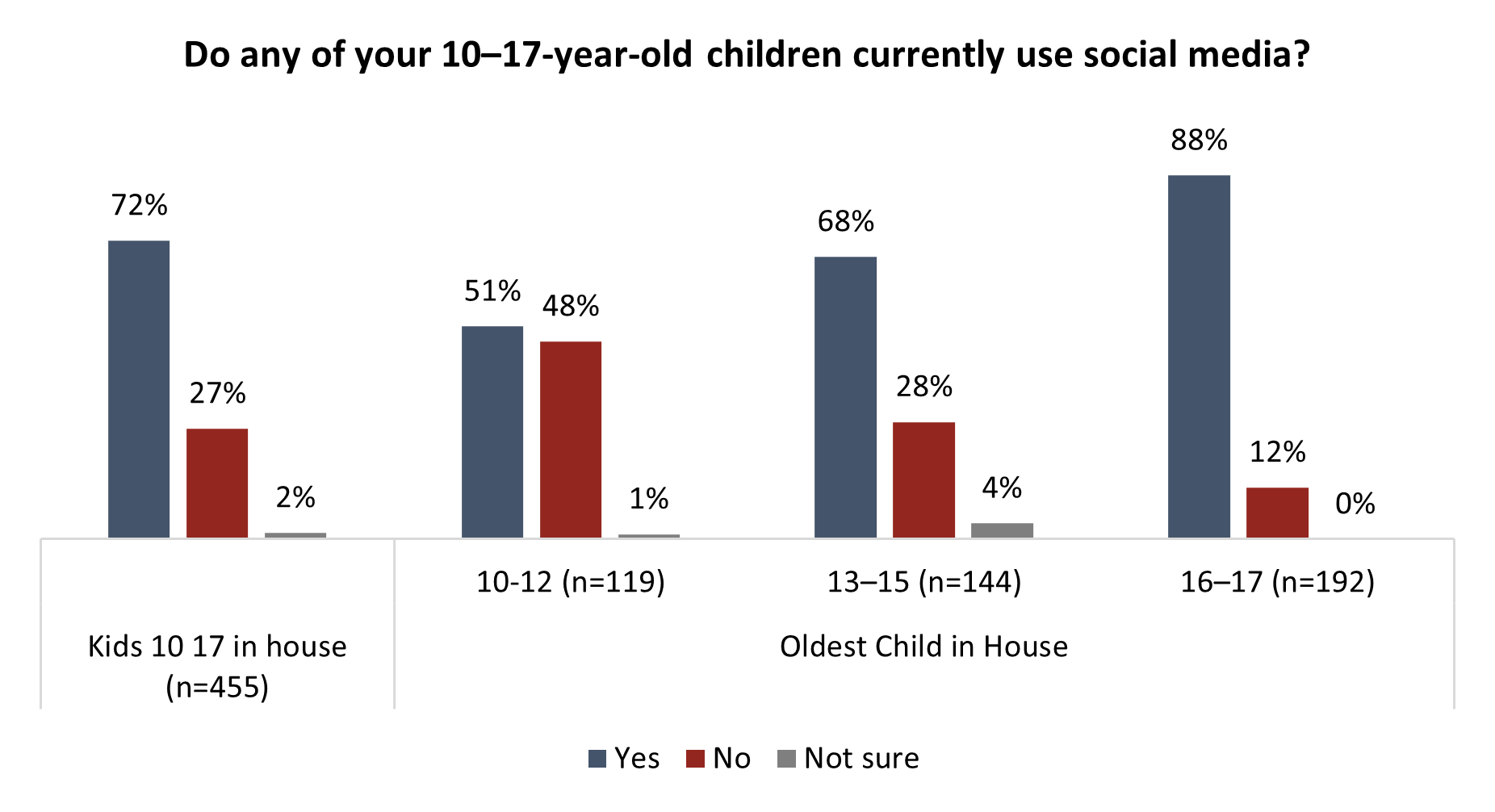 Four-in-five parents whose children are using social media are implementing some form of restriction, with younger children more likely to be the subject of such oversight. Notably, just 29 per cent of those with 16- to 17-year-olds have no restrictions in place, suggesting even older teenagers are being monitored to some extent.
Part Two: Views on a proposed Under-16 Ban
Increasingly, there is a push for government legislation on the use of social media. Australia became the first country in the world to ban social media use for kids younger than 16 in December 2025. Those under 16 are no longer allowed to use the major social media apps of TikTok, X, Facebook, Instagram, YouTube, Snapchat and Threads. New accounts are subject to age verification, previous profiles were deactivated. The goal of the ban is to reduce the negative impact of social media’s “design features that encourage [young people] to spend more time on screens, while also serving up content that can harm their health and wellbeing”. Other countries, including Denmark, France, Germany, the U.K. and Canada are following suit or considering heading down that path.
In the U.S., Florida has attempted to place restrictions on social media accounts for those under 14, and require parental consent for those aged 14 and 15, but was blocked by federal courts. Seven other states have attempted various restrictions, including parental consent for those under 16, but have faced court challenges from technology industry groups.
Widespread support for banning social media for those younger than 16
A full ban and even softer measures such as age verification finds overwhelming support from Americans.
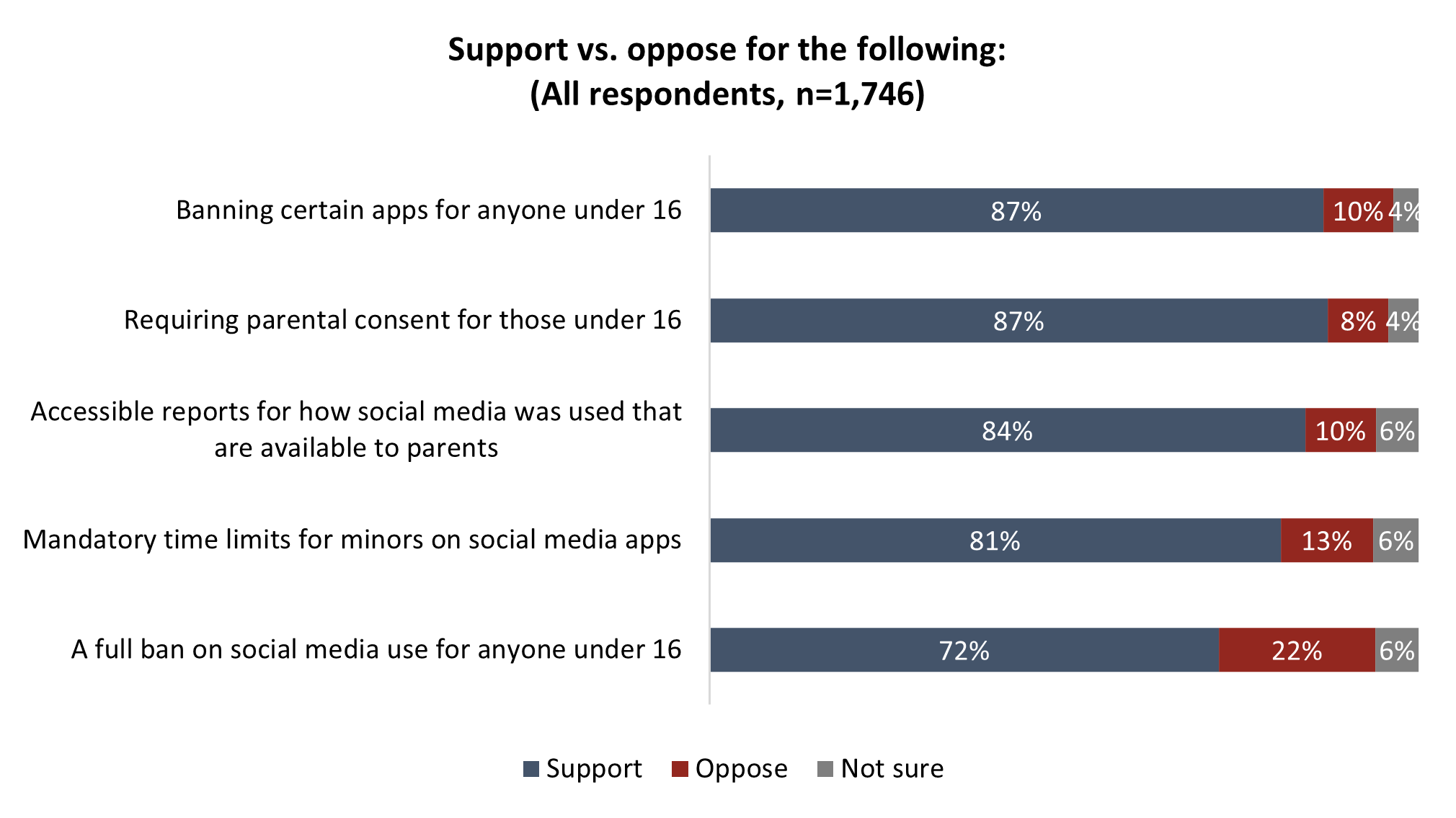
Approaching nine-in-ten (87%) say they support banning certain apps for those under 16. Measures such as requiring parental consent for social media use for younger kids (87%), reports on social media use available in app (84%), and mandatory time limits (81%) are also supported by more than four-in-five. Extending the ban to all social media receives the support of 72 per cent:
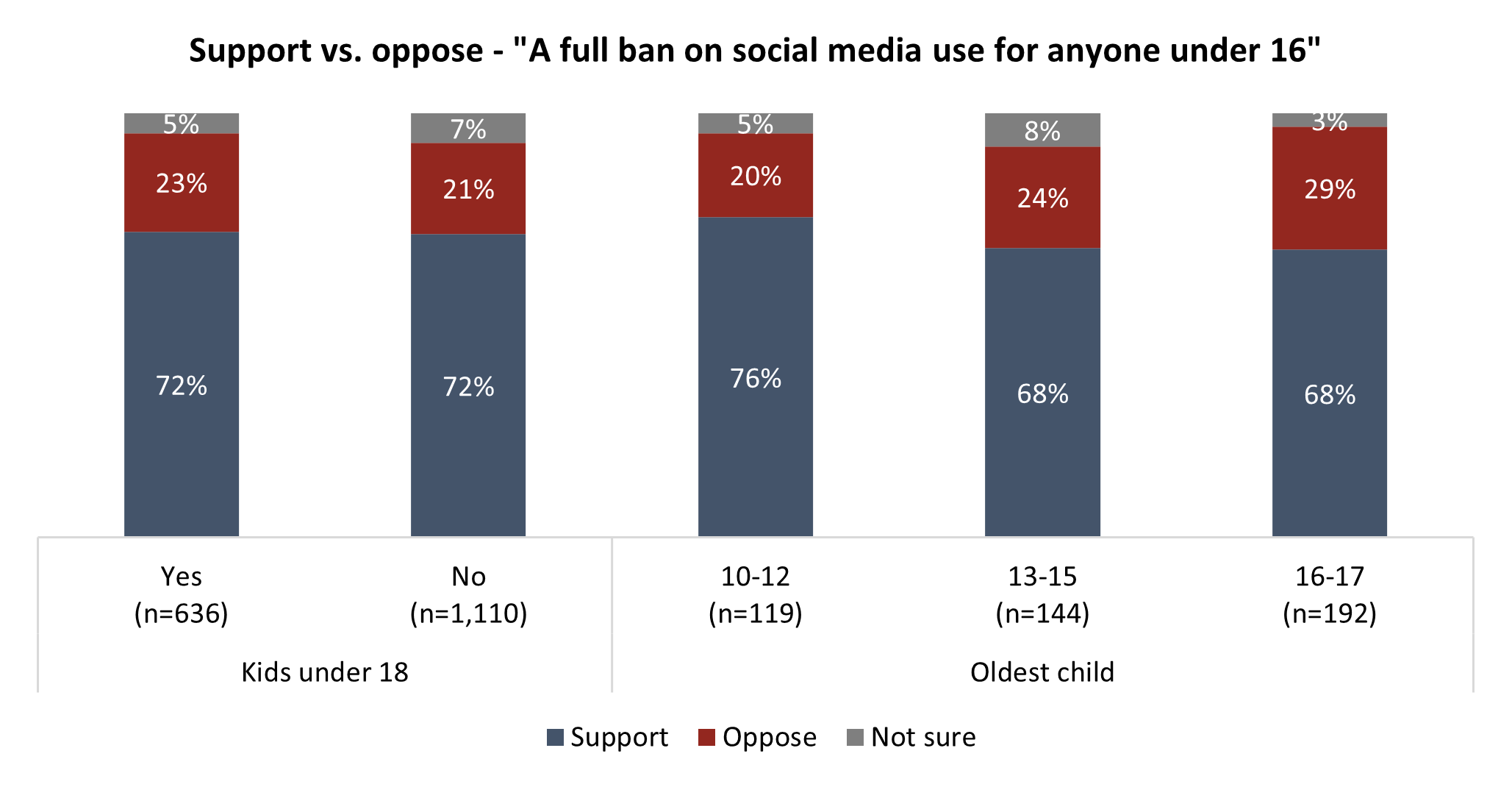
Parents with kids of all ages support a full ban on social media use for those under 16 at majority levels. But support does dwindle the older the oldest child in the parents’ household. Three-quarters (76%) of parents whose oldest kid is between 10- and 12-years-old support a full ban for under-16s; two-thirds (68%) of those whose oldest kid is 16 or 17 agree:
Support for blocking access to most apps, division over YouTube
The gap in support between banning certain apps (87%) and a full ban on social media use for anyone under 16 (72%) noted above suggests there is some hesitation to fully restrict children from using all types of social media. Those who would only ban certain apps were asked which apps they would ban under-16s from using. X/Twitter (83%), TikTok (80%) and Snapchat (78%) are the top choices, followed by Instagram (72%), Reddit (66%) and Facebook (66%). YouTube (45%) is chosen by fewer than half.
In Australia, YouTube was included in the ban because it was the “most frequently cited platform” where children under 16 saw harmful content. However, YouTube argues that banning users under 16 from creating accounts makes them less safe because they are no longer able to access YouTube’s parental control and wellbeing functions.
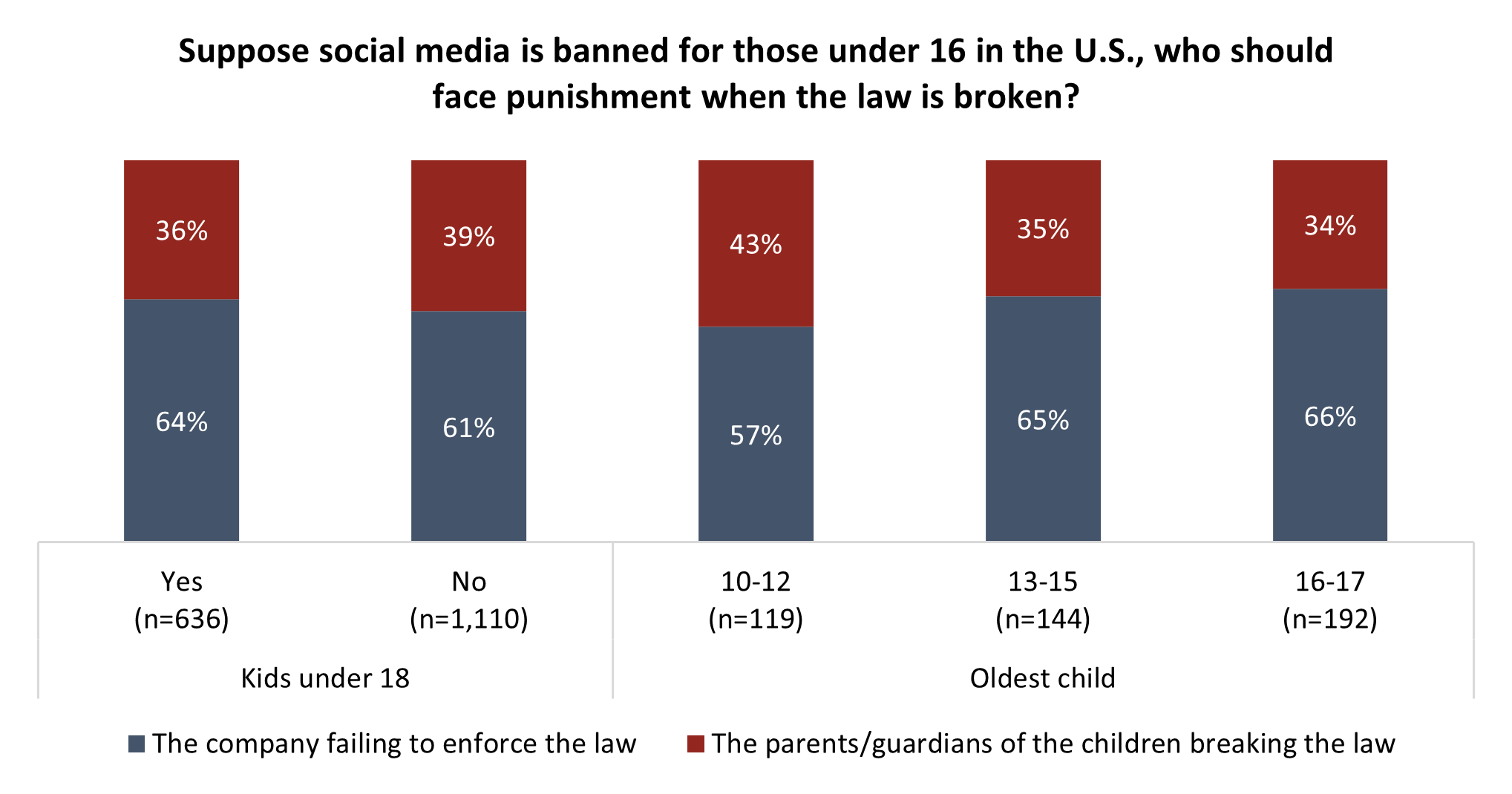
The onus on enforcing the social media ban in Australia is on the companies. Parents do not face fines or punishment if their child is found using a banned app. Americans, by a two-to-one margin, say if the U.S. were to pass a similar social media ban, companies should face the legal responsibility of enforcing it:
But – ban or no ban – should government or parents regulate teens’ social media use?
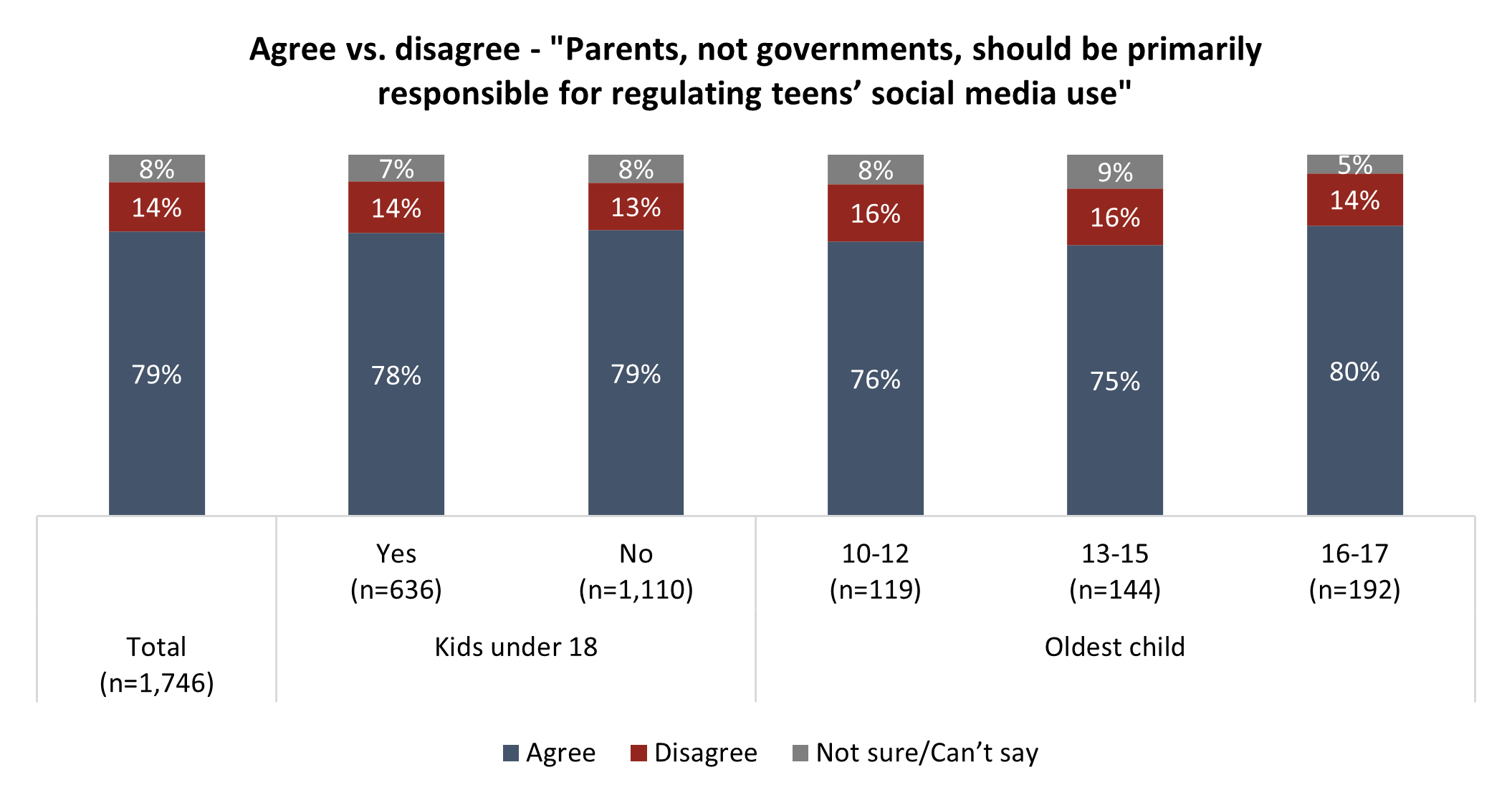
There is a curious juxtaposition in Americans’ views of who should be responsible for managing the social media use of teens. Four-in-five (79%) Americans agree that parents should be primarily responsible for regulating teens’ social media use, not governments. Views among those with kids under 18 at home versus those who do not have them are nearly identical:
METHODOLOGY
| Angus Reid USA conducted an online survey from March 2 – 12, 2026 among a representative randomized sample of 1,746 American adults who are members of Angus Reid Forum USA. For comparison purposes only, a probability sample of this size would carry a margin of error of +/- 2.5 percentage points, 19 times out of 20. Discrepancies in or between totals are due to rounding. The survey was self-commissioned and paid for by Angus Reid USA. Detailed tables are found at the end of this release. |
For detailed results by age, gender, region, education, and other demographics, click here.
For detailed results by presence of children in house, click here.
For PDF of full release, click here.
MEDIA CONTACT:
Angus Reid, Chairman: angus@angus.org @AngusReid
Shachi Kurl, President: 1.604.908.1693 shachi.kurl@angusreid.org @shachikurl