

Largest number say they’d be at the Super Bowl if they had their pick of any sports destination
February 6, 2026 – Two gigantic sporting events are kicking off, figuratively and literally this week. The Winter Olympics in Italy start today, while the Seattle Seahawks and New England Patriots face off on Sunday in Super Bowl LX.
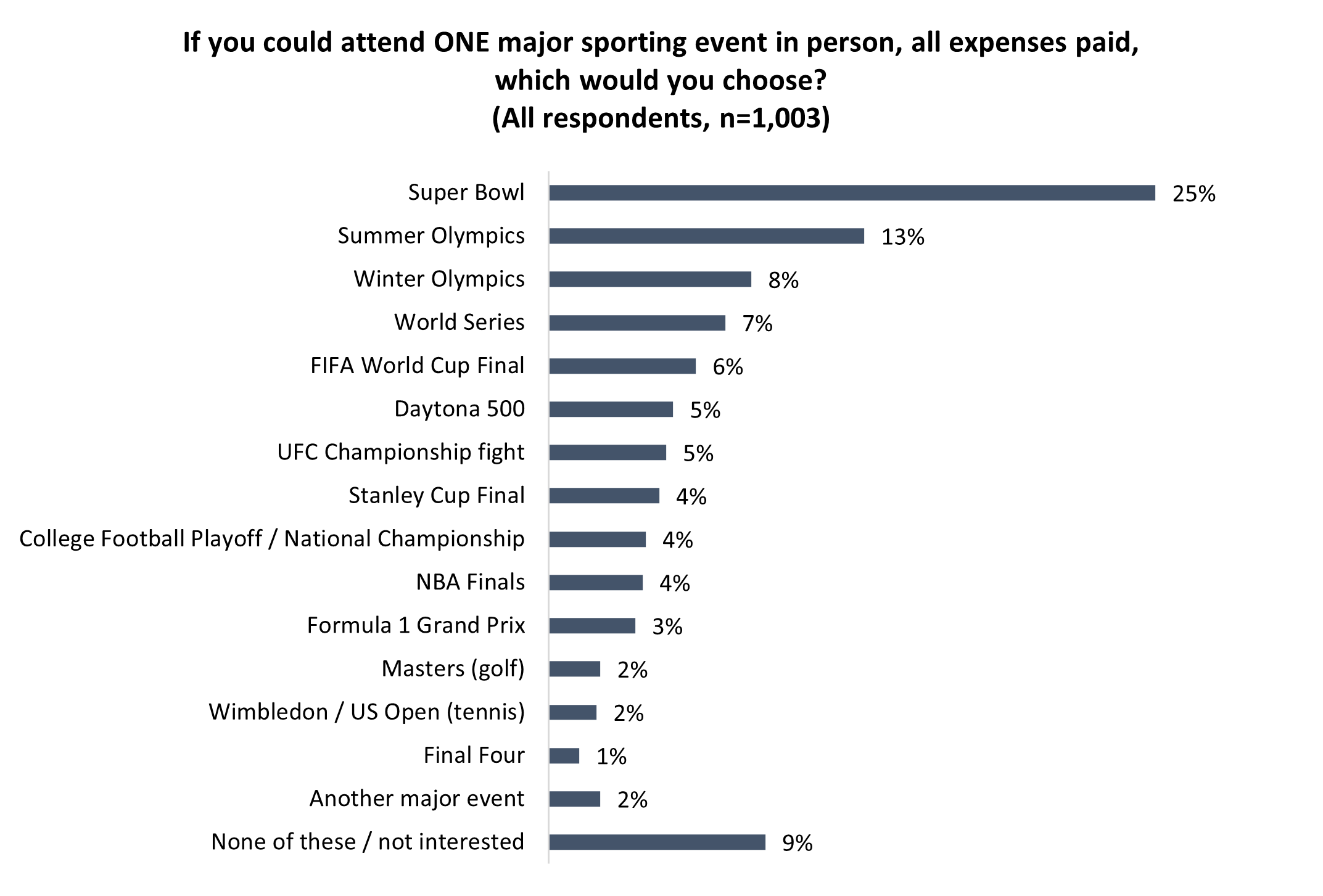
New data from Angus Reid finds the largest number of Americans (25%) would opt for the spectacle of the Super Bowl if given an all-expense opportunity. That said, the Olympics appear to be looming large in the minds of many. A close to equal number (21%) would opt for a trip to the Olympics – though they’re divided between which season they’d prefer. Approximately one-in-ten would choose summer (13%) while a similar proportion would choose winter (8%). This notably outpaces other major domestic events like the World Series (7%), Daytona 500 (5%), Masters (2%), and more.
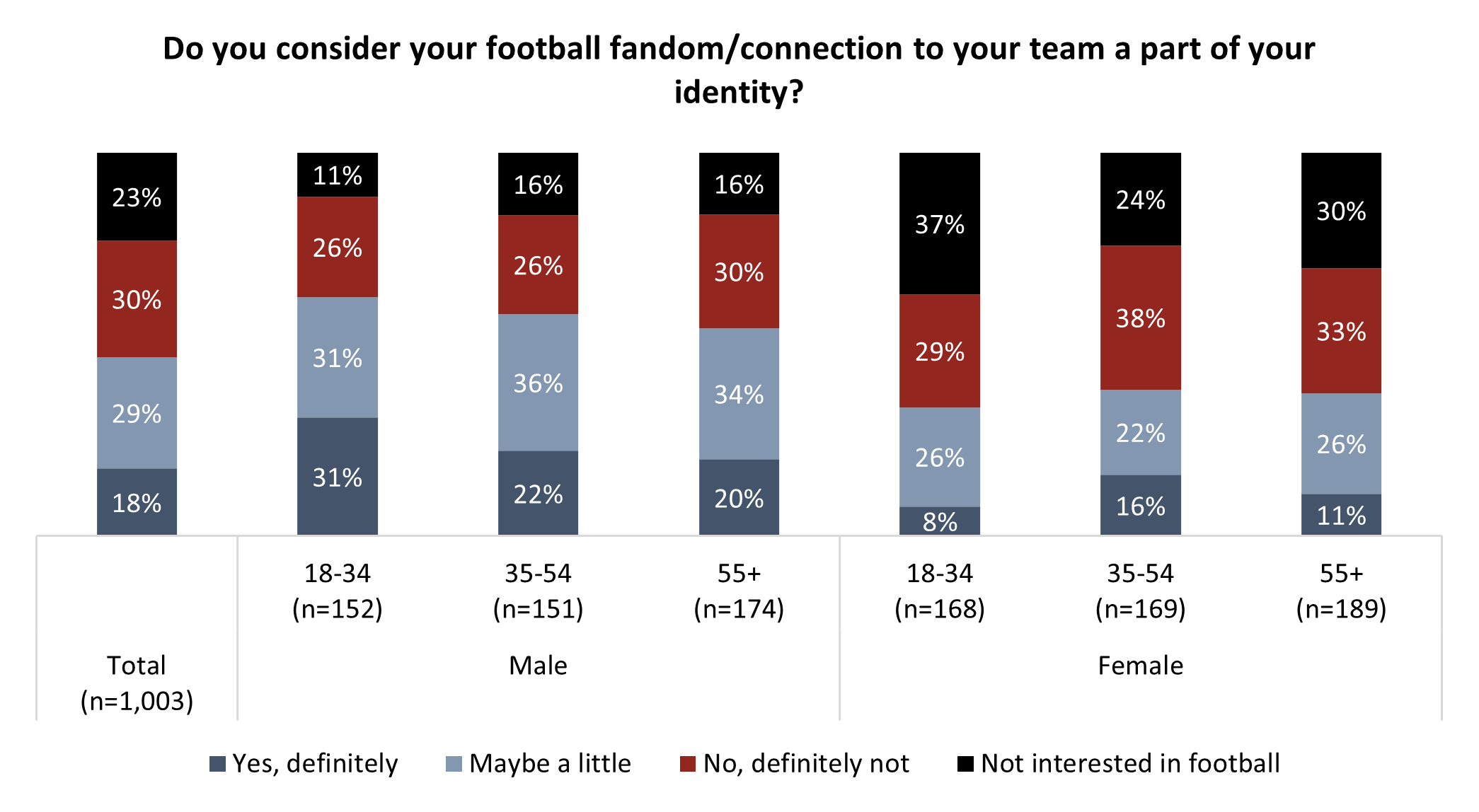
The preference for the Super Bowl likely hinges on the importance of football in the national culture. Half of Americans say they’re interested in the sport, and overall, approaching half (47%) say it is a part of their identity.
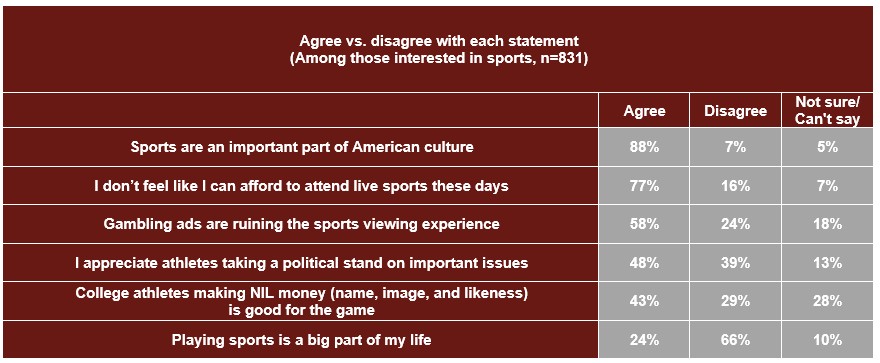
This perhaps sharpens the sting of feeling priced out from attending many of the events these fans love. Overall, four-in-five Americans say they don’t feel like they can afford to attend live sports these days (77%).
More Key Findings:
- Half of Americans say they appreciate athletes taking a political stand, while 39 per cent say they do not. This, as players have weighed whether or not to speak about ongoing violence in Minnesota, and ICE operations more broadly.
- Many appear to be exhausted with gambling advertising in sports. Three-in-five (58%) say these ads are ruining the viewing experience, while one-quarter disagree (24%)
- Opinions are divided on the rise of NIL money in college sports, with 43 per cent saying it is good for the game and nearly three-in-ten opposed.
INDEX:
- Super Bowl Sunday or Off to the Olympics?
- Football a key part of identity for many Americans
- Fans feel priced out and tired of gambling ads
- Taking a political stand? Americans divided about athletes’ role
Super Bowl Sunday or Off to the Olympics?
The Seahawks and Patriots are set to battle it out in the biggest game of the year and viewing it in person comes at a premium price. The average single ticket currently costs around $5,000 on the re-sale market, and that’s before factoring in flights, hotels and other expenses.
The high price of tickets speaks to the draw of the spectacle that is the Super Bowl. And one-quarter (25%) of Americans, if they could attend one major sporting event all-expenses paid, say their choice would be the Super Bowl, putting it far ahead of the Olympics, both summer (13%) and winter (8%); the World Series (7%); the final of the World Cup (6%), the Daytona 500 (5%) and a UFC Championship fight (5%):
Football a key part of identity for many Americans
For many Americans who follow the sport, football is more than entertainment – it is part of how they see themselves. Overall, nearly half (47%) of adults say their connection to a football team is at least “a little” part of their identity, including 18 per cent who say it definitely is. Still, that leaves a sizeable portion on the outside: more than one-in-five (23%) say they are not interested in football at all.
Age and gender shape these views in notable ways. Men are consistently more likely than women to say football is central to their identity, particularly younger men. Among males aged 18 to 34, six-in-ten (62%) say football is at least somewhat part of who they are, including nearly one-third (31%) who say it definitely is. That sense of identity softens with age but remains present even among men 55 and older.
Women, by contrast, are more likely to say football does not resonate with them personally. Roughly three-in-ten women say they are not interested in football, rising to 37 per cent among those aged 18 to 34. Still, a meaningful minority of women – particularly in midlife – report at least some identity connection to the sport, suggesting football’s cultural reach extends well beyond its most devoted fan base.
Fans feel priced out and tired of gambling ads
Among Americans who say they are interested in sports, enthusiasm for the cultural role of athletics remains strong, but frustration with the modern sports economy is widespread. Nearly nine-in-ten (88%) agree that sports are an important part of American culture, underscoring their enduring social relevance.
At the same time, affordability has become a growing barrier. More than three-quarters (77%) say they no longer feel they can afford to attend live sporting events, a reflection of rising ticket prices, added fees, and the broader cost-of-living squeeze facing many households.
Commercialization is also wearing on fans. A majority (58%) agree that gambling advertisements are ruining the sports viewing experience, compared to one-quarter who disagree. The finding points to mounting fatigue with the saturation of betting content across broadcasts and digital platforms.
Opinions are divided on the rise of NIL money in college sports, with 43 per cent saying it is good for the game and nearly three-in-ten opposed. Meanwhile, relatively few (24%) say playing sports themselves is a big part of their own lives, highlighting a gap between spectatorship and participation.
Taking a political stand? Americans divided about athletes’ role
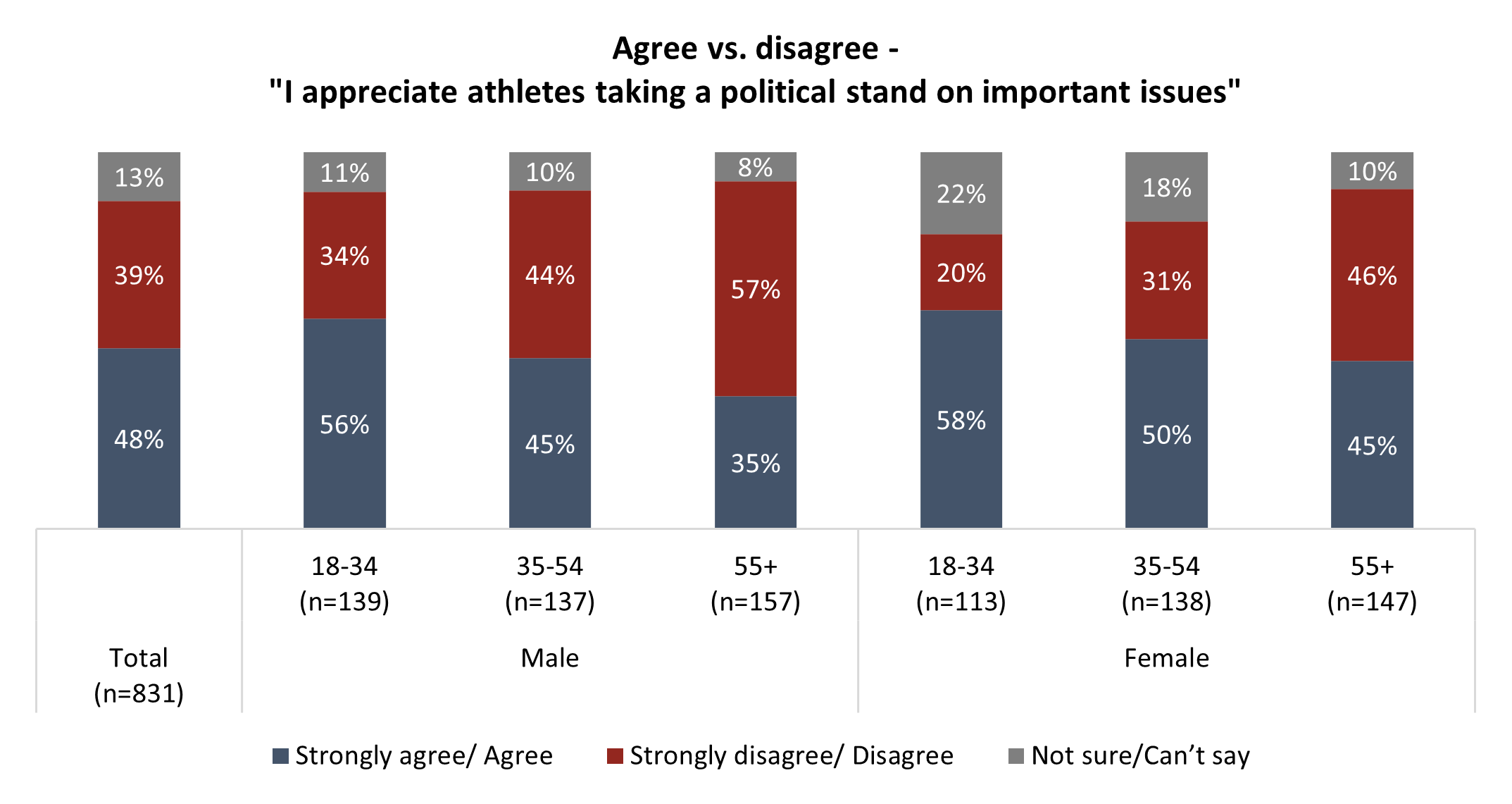
After two people were killed by ICE agents in Minnesota, many athletes – including Indiana Pacers guard Tyrese Haliburton and San Antonio Spurs centre Victor Wembanyama chose to speak out on the issue, while others, including Oklahoma City all-star Chet Holmgren, chose to avoid saying much. This is the latest in years of debate over whether athletes should “shut up and dribble.” Overall, just under half (48%) of sports-interested Americans say they appreciate athletes taking a political stand, while 39 per cent say they do not.
Younger adults are more receptive than older ones. A majority of those aged 18 to 34 say they appreciate athlete activism, while agreement drops steadily with age. Among Americans 55 and older, a majority express disagreement, suggesting lingering resistance to the blending of sports and politics among older fans.
Gender gaps also emerge. Women across age groups are more likely than men to say they appreciate athletes speaking out, particularly younger women, where nearly six-in-ten express support. Men aged 55 and older stand out as the most opposed group, with a clear majority saying they do not appreciate athletes taking political positions.
These divisions reflect a broader cultural tension around sports as a platform: for some, athletes using their visibility to address social issues is a welcome evolution; for others, it clashes with expectations that sports remain an escape from politics.
METHODOLOGY
Angus Reid USA conducted an online survey from February 1 – 5, 2026 among a representative randomized sample of 1,003 American adults who are members of Angus Reid Forum USA. For comparison purposes only, a probability sample of this size would carry a margin of error of +/- 3 percentage points, 19 times out of 20. Discrepancies in or between totals are due to rounding. The survey was self-commissioned and paid for by Angus Reid USA. Detailed tables are found at the end of this release.
For detailed results by age, gender, region, education, and other demographics, click here.
For PDF of full release, click here.
MEDIA CONTACT:
Shachi Kurl, President: 1.604.908.1693 shachi.kurl@angusreid.org @shachikurl
Dave Korzinski, Research Director: 250.899.0821 dave.korzinski@angusreid.org